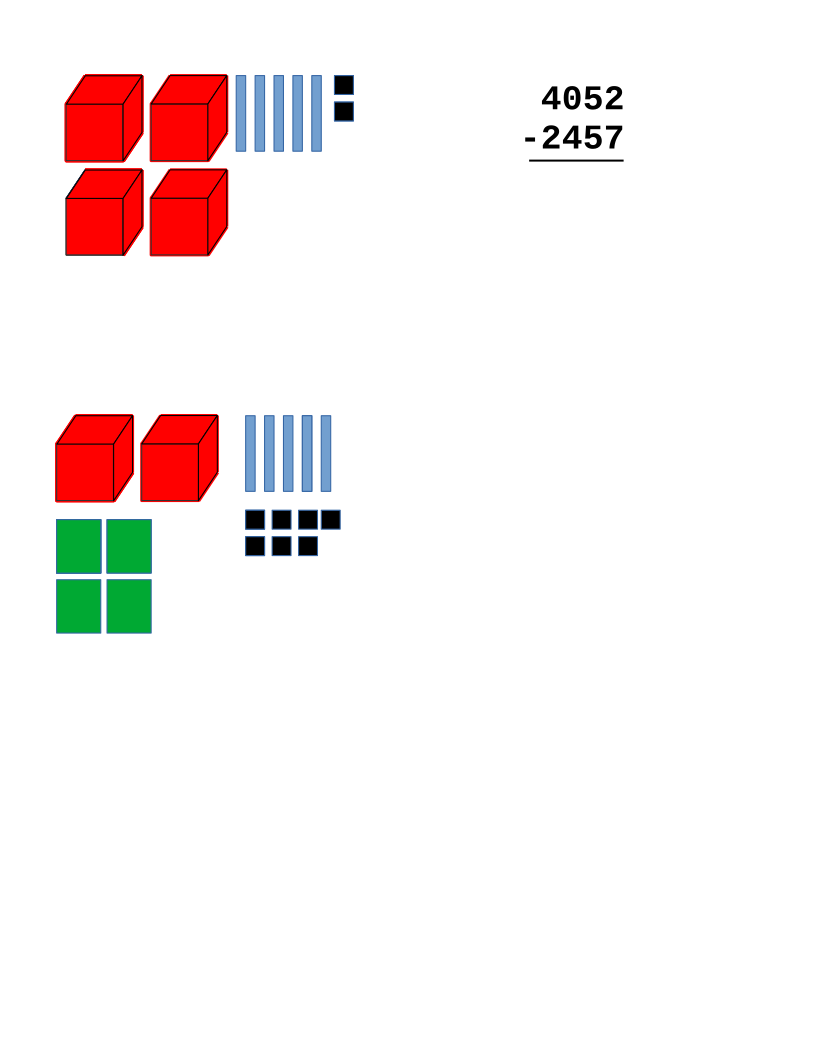
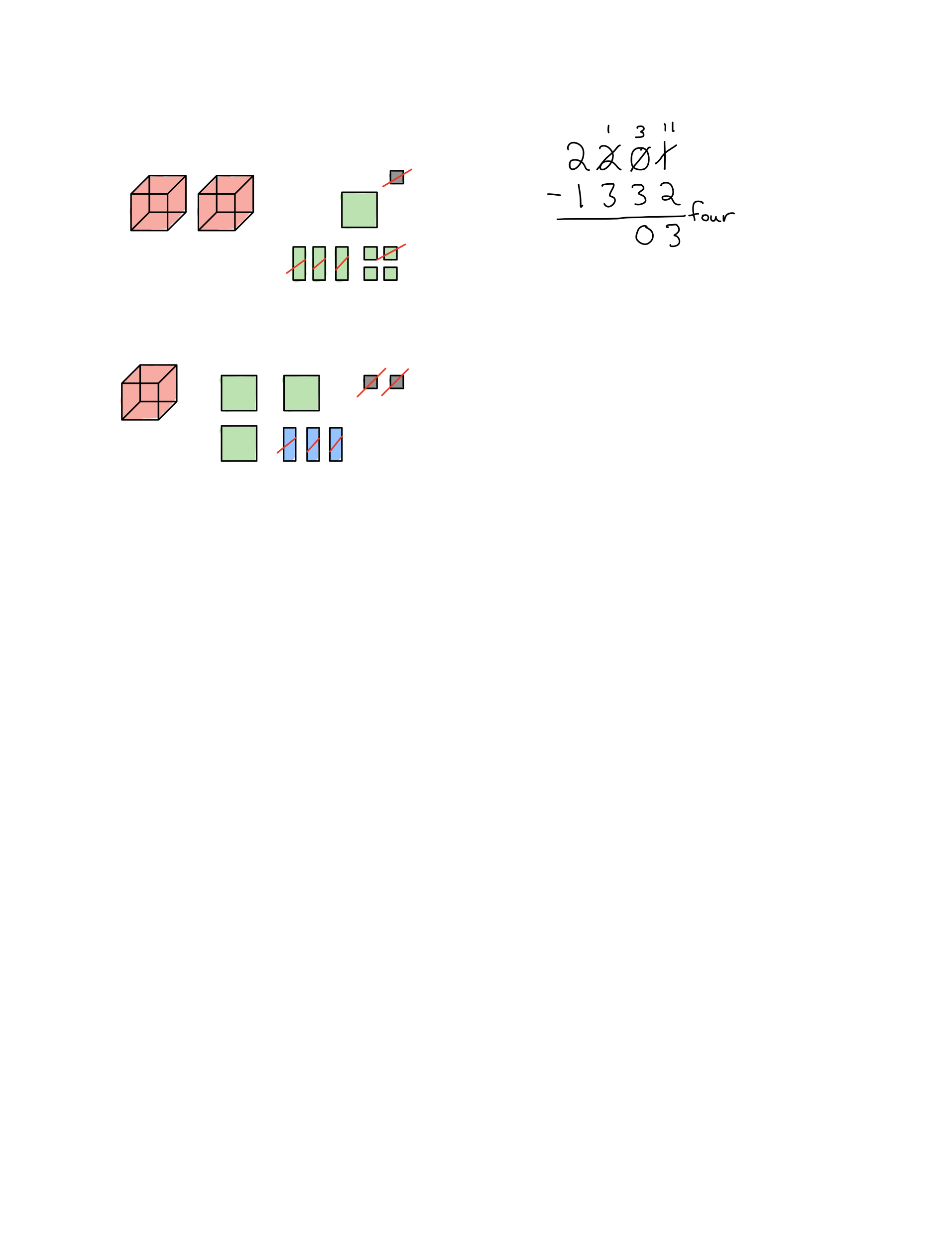
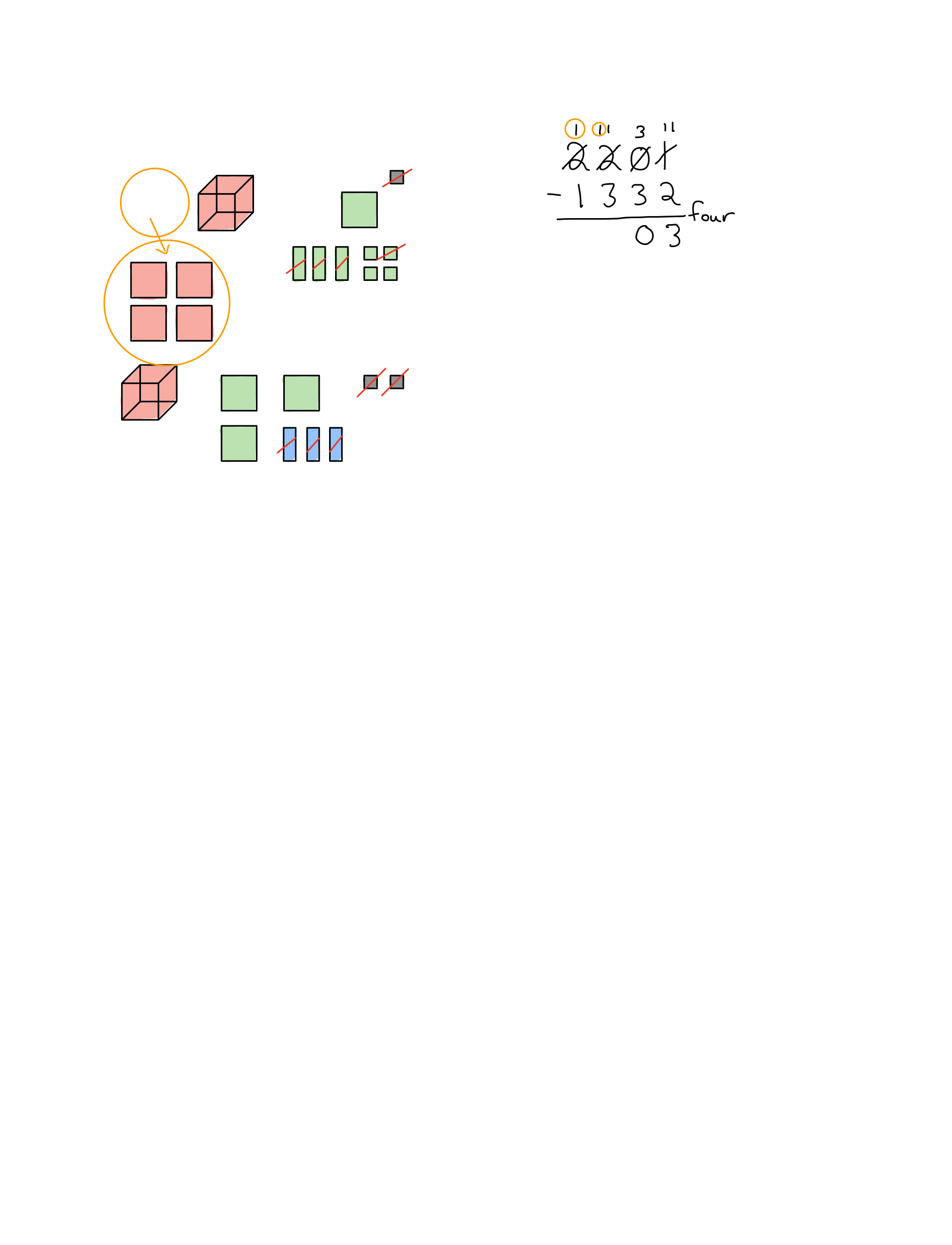
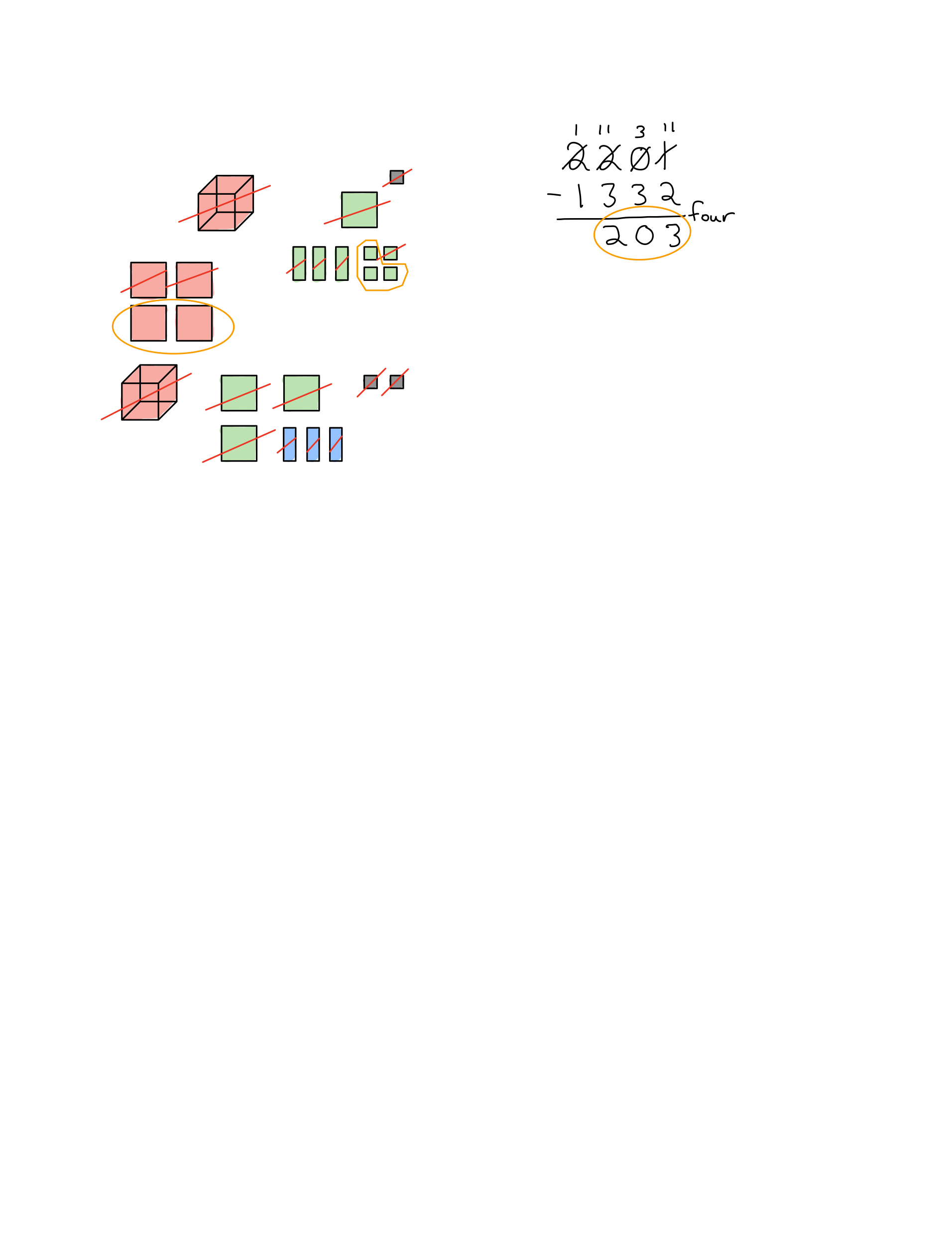
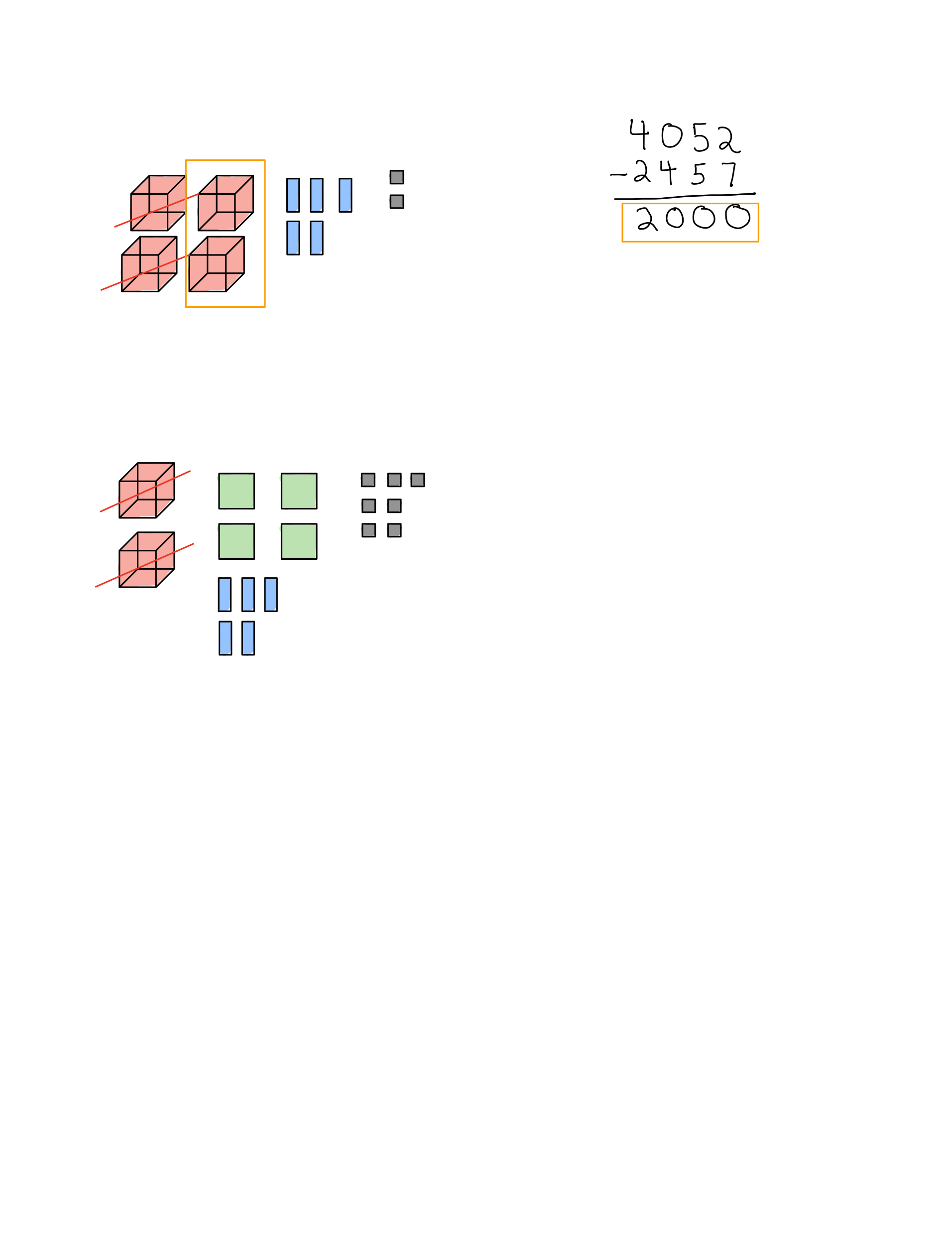
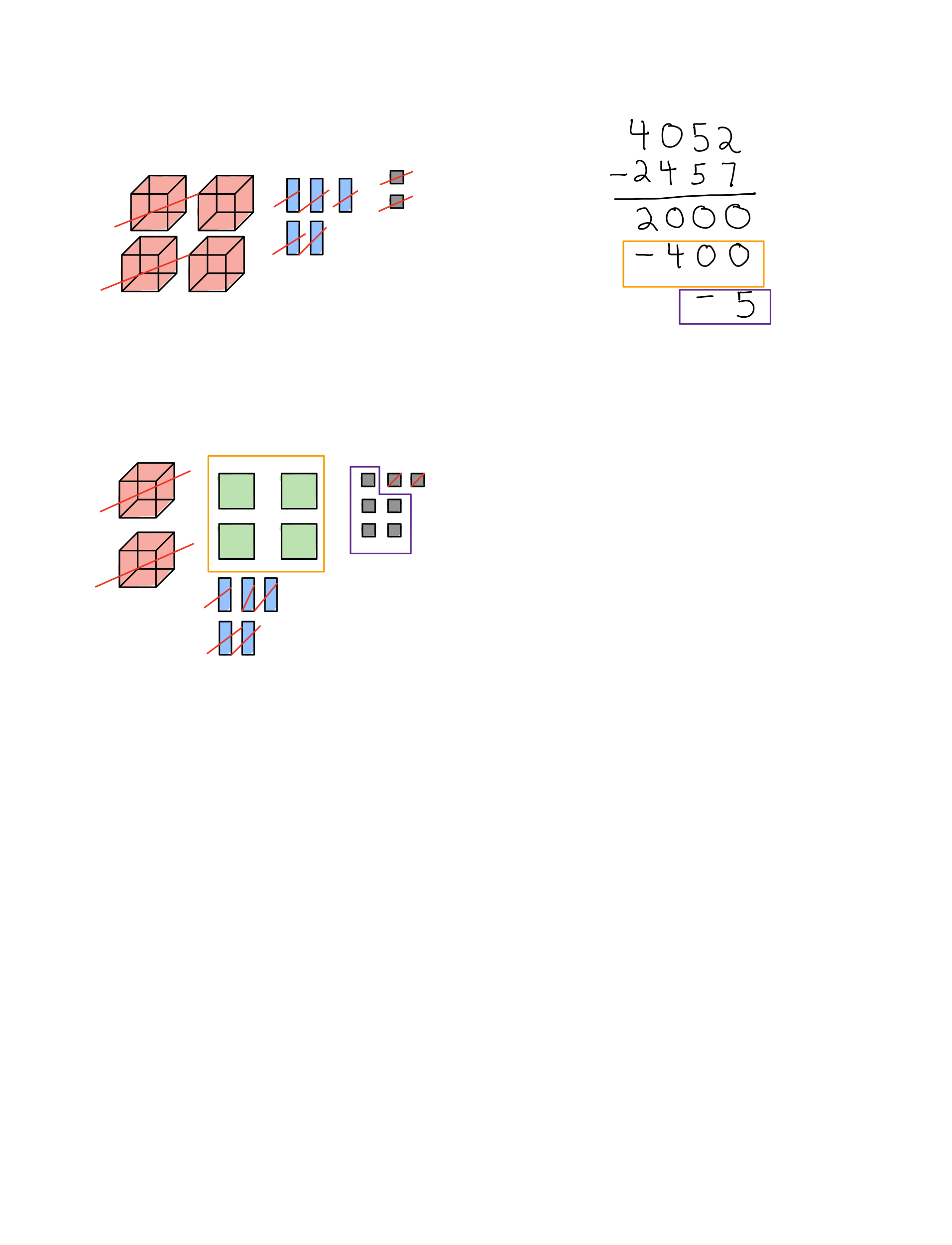
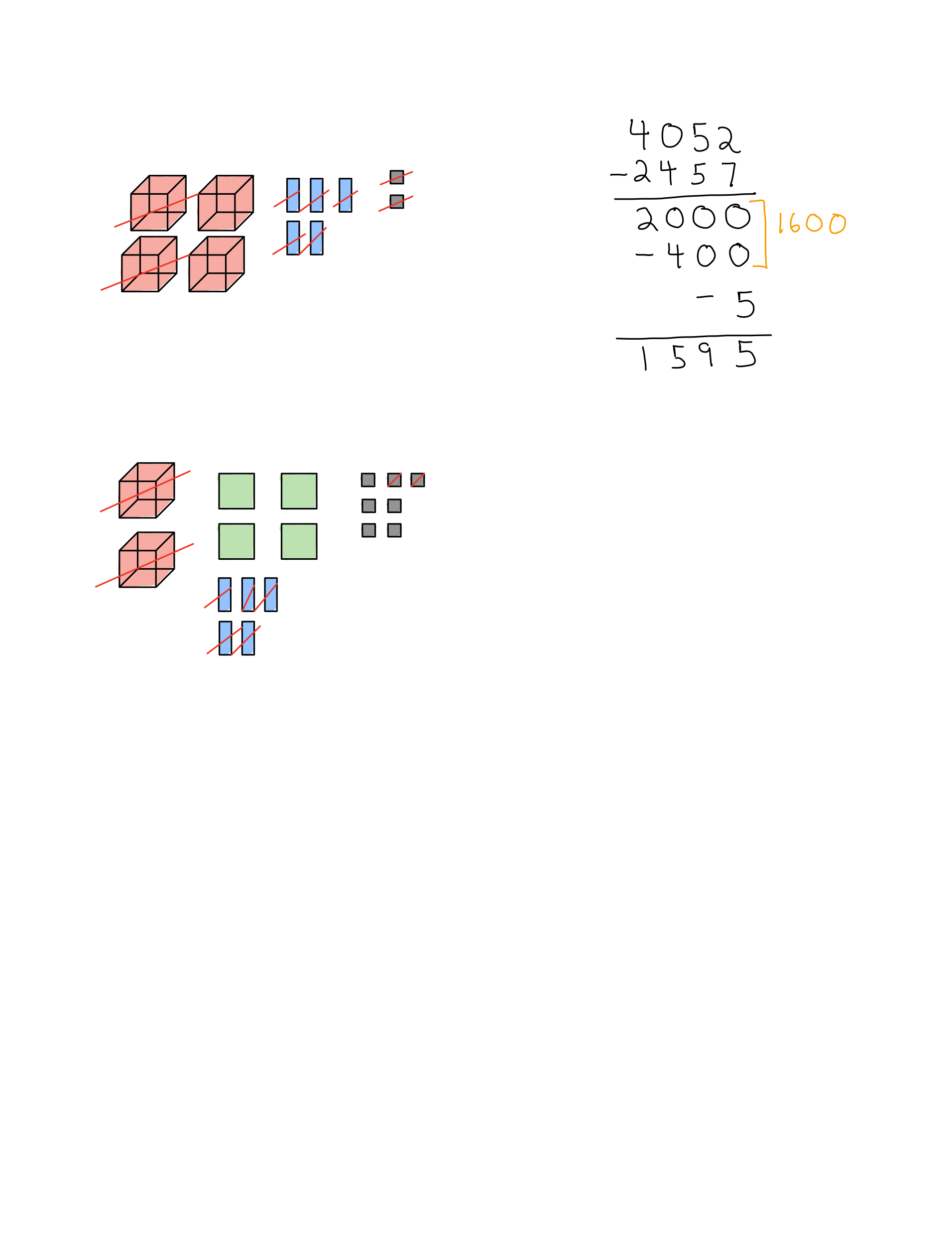
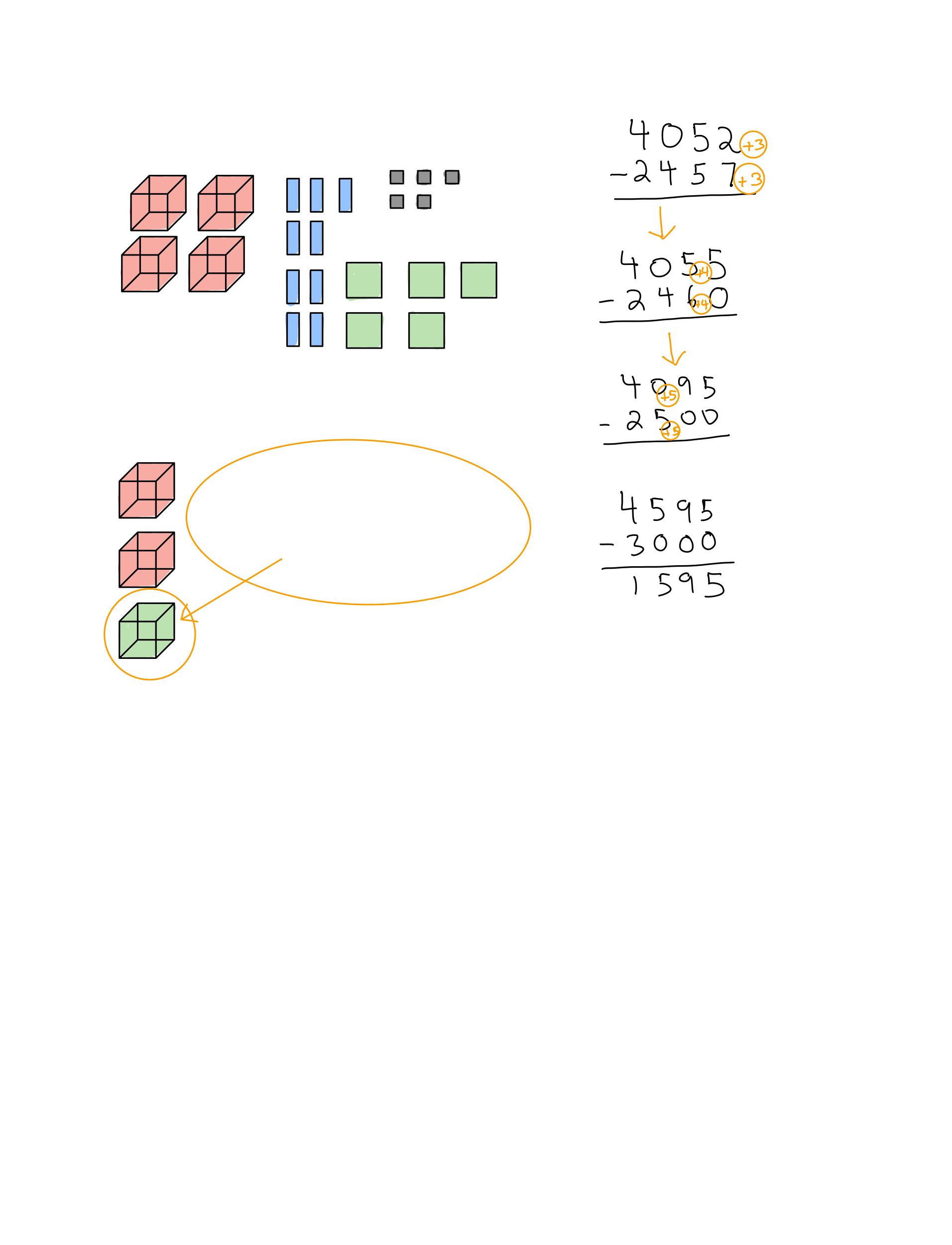
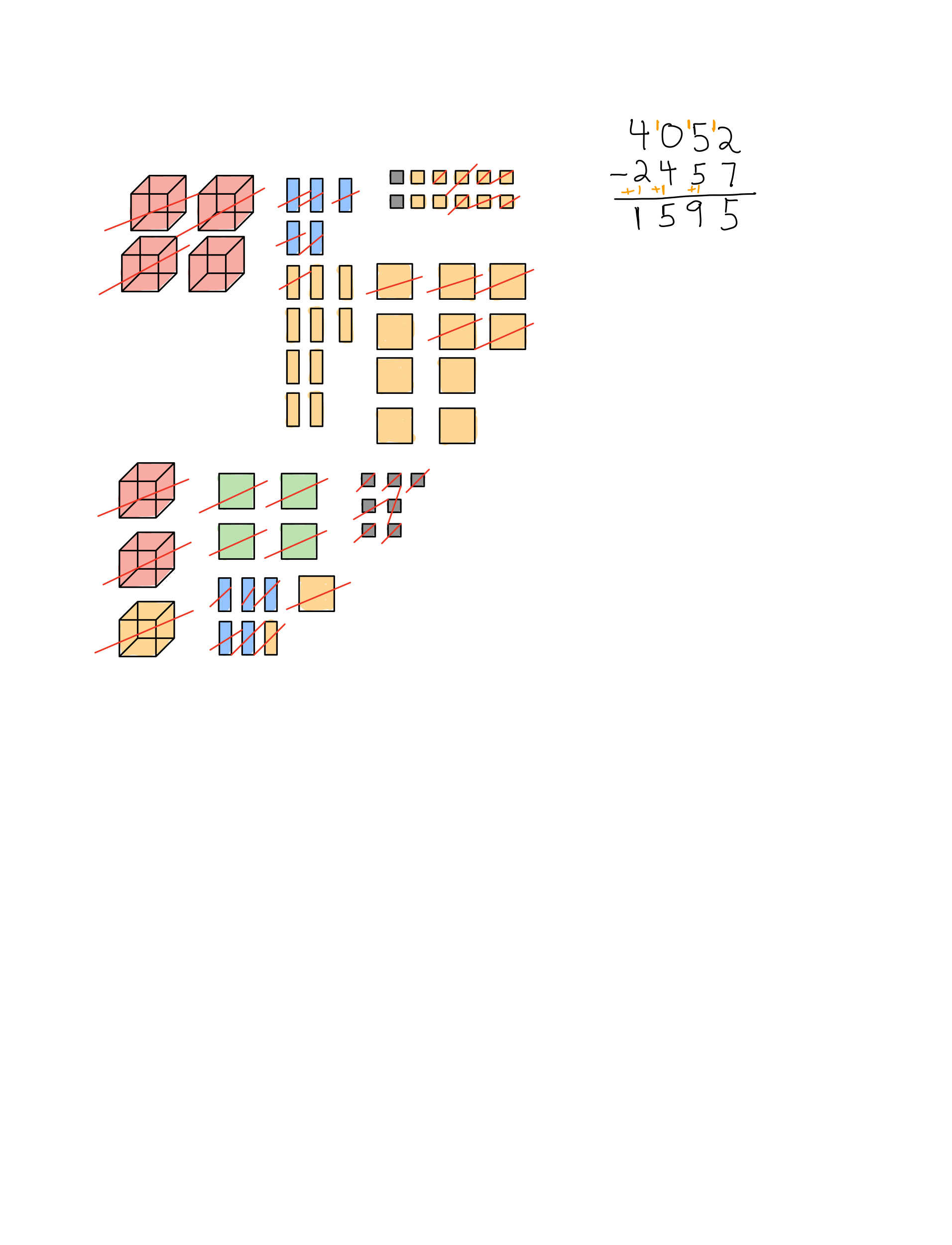
Let’s subtract
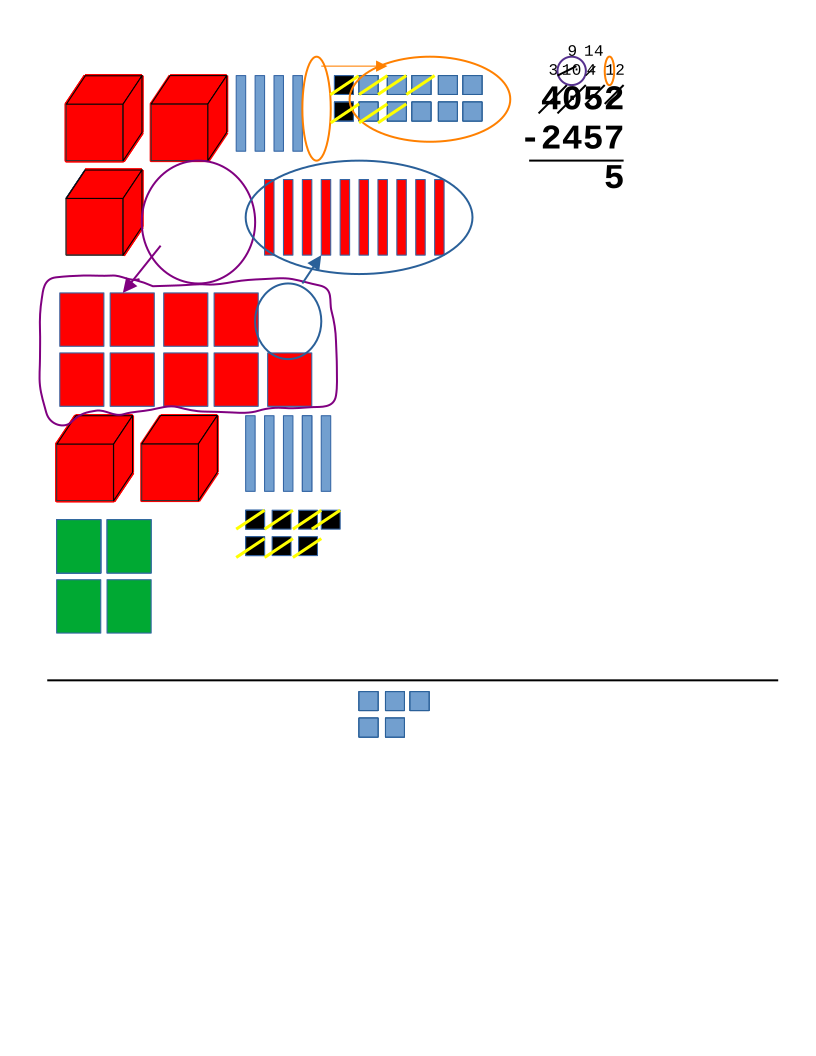
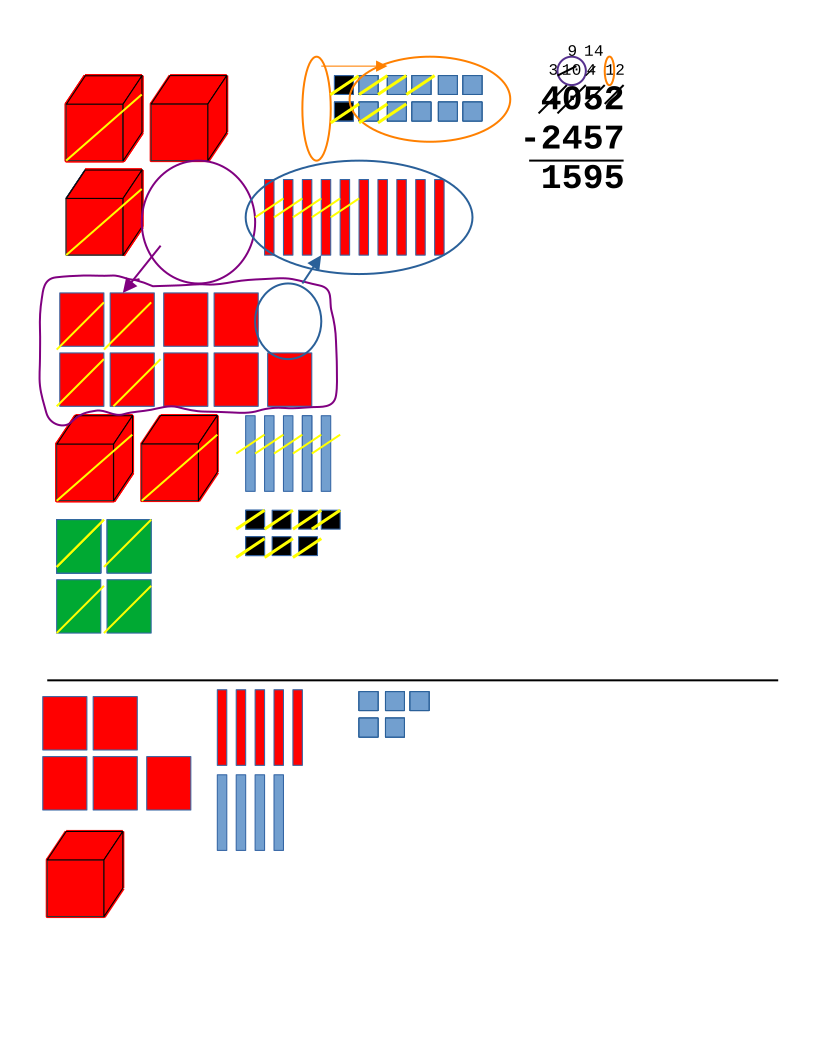
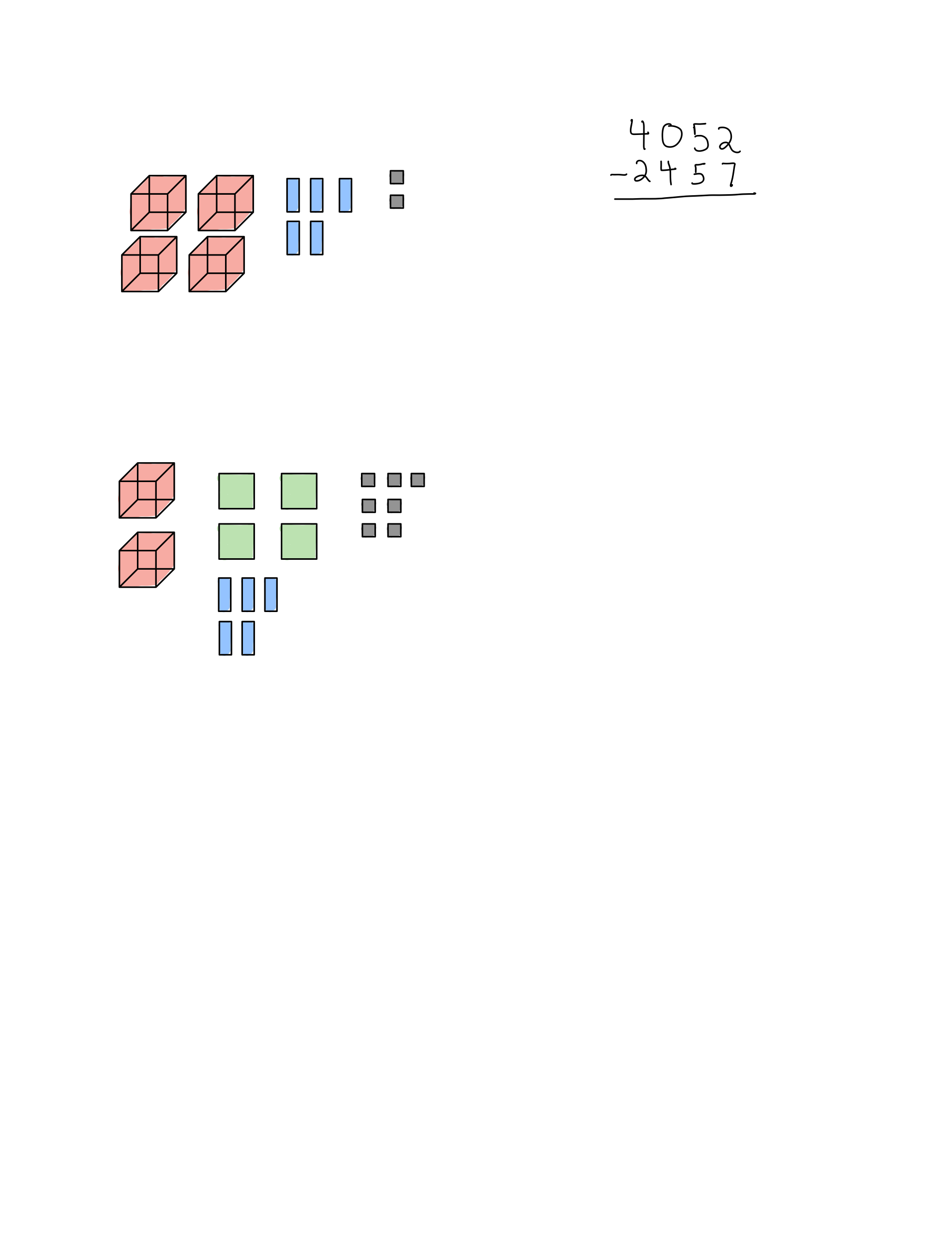
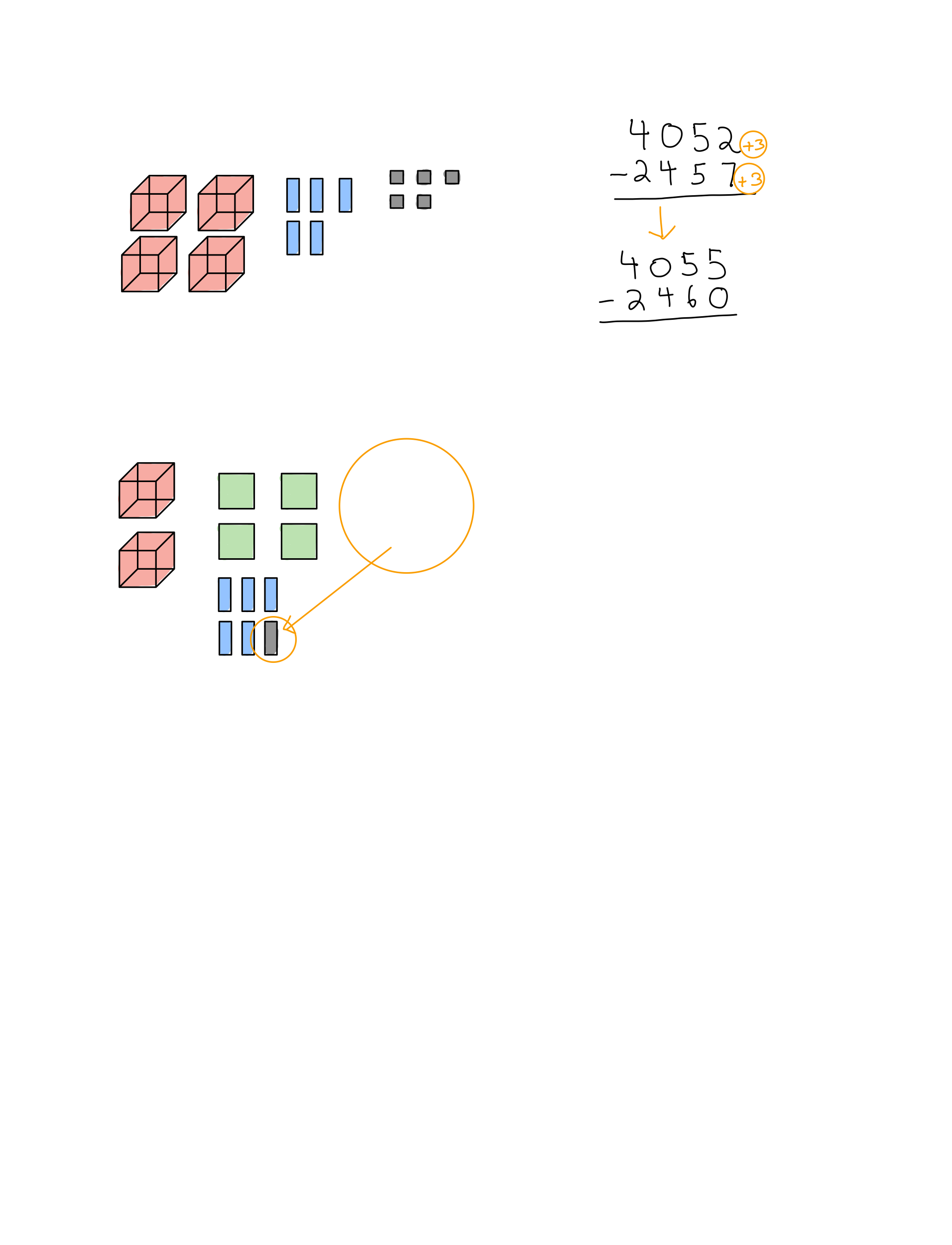
\(4052-2457\) using the equal addition algorithm. As usual we line up our numbers so digits of the same place value are in the same column, but this time we will have just a little bit of space between the bottom number and our difference (for any borrowed 1’s that will appear). And, as usual, we will include blocks for added pictorial understanding.
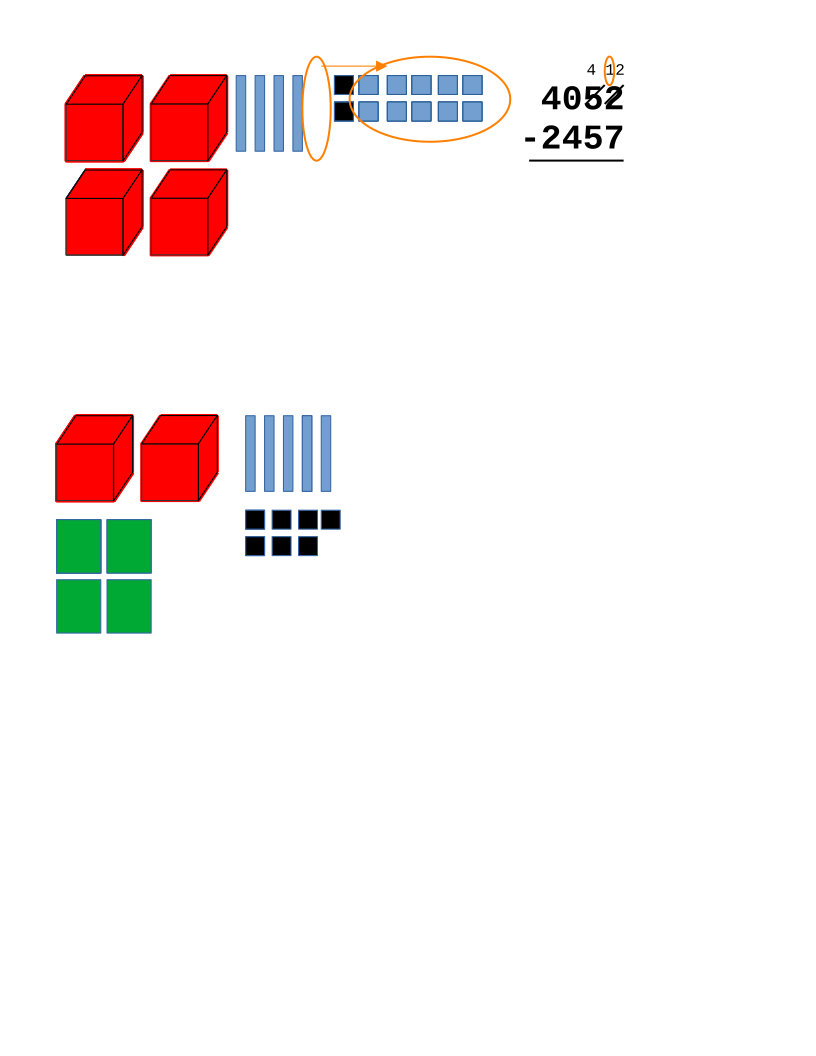
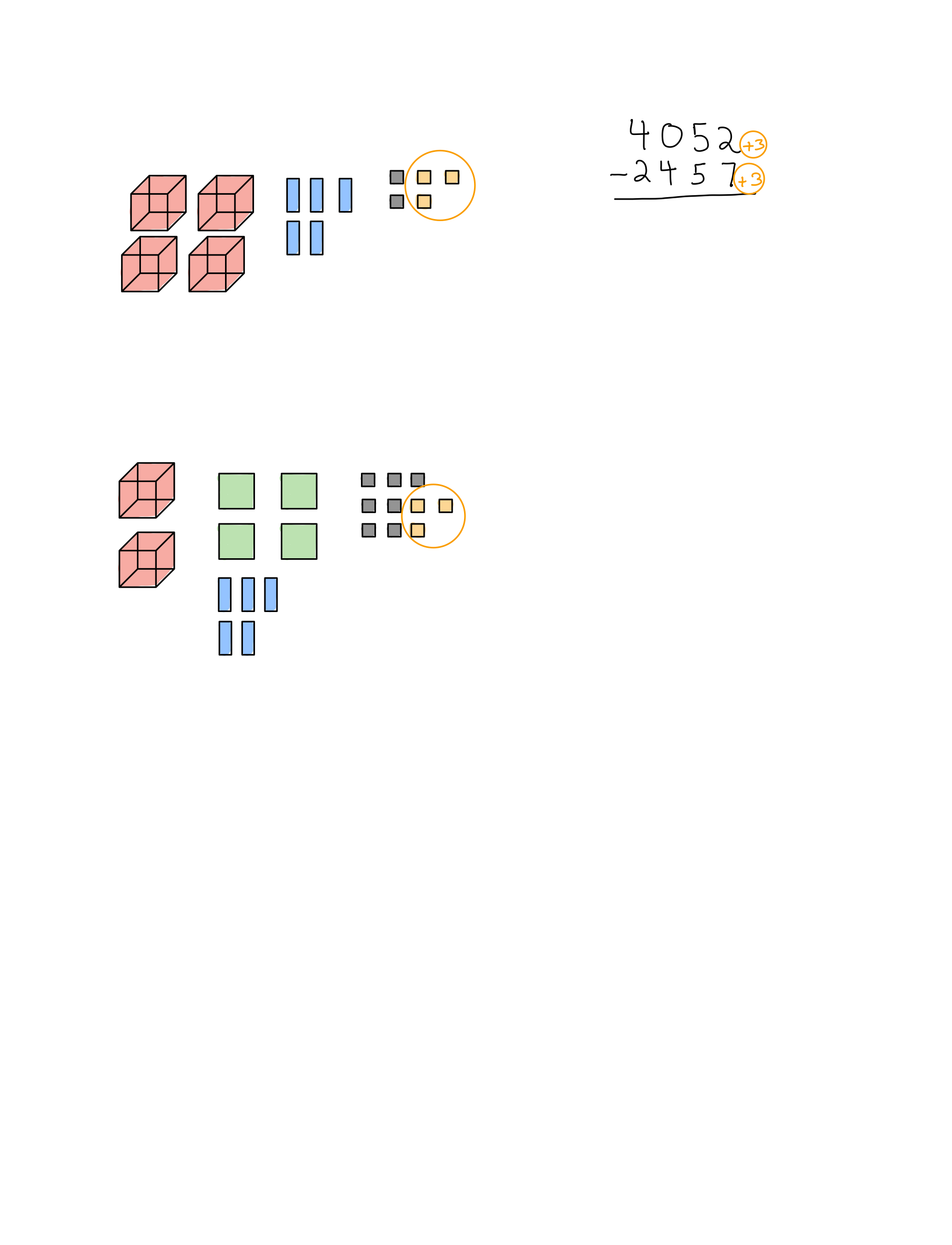
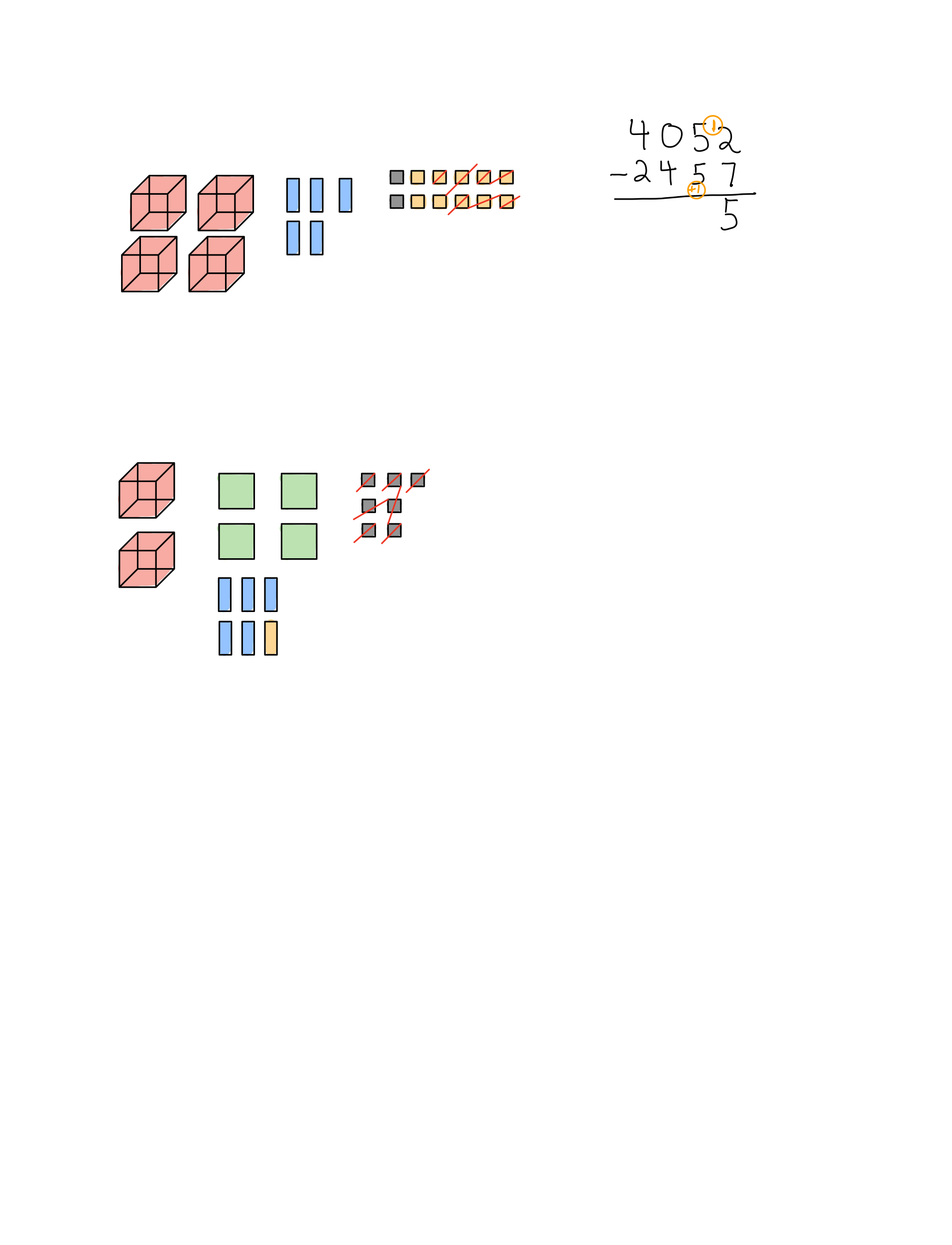
Starting with the ones place, we see that the digit
\(2\) in the top number is less than the digit
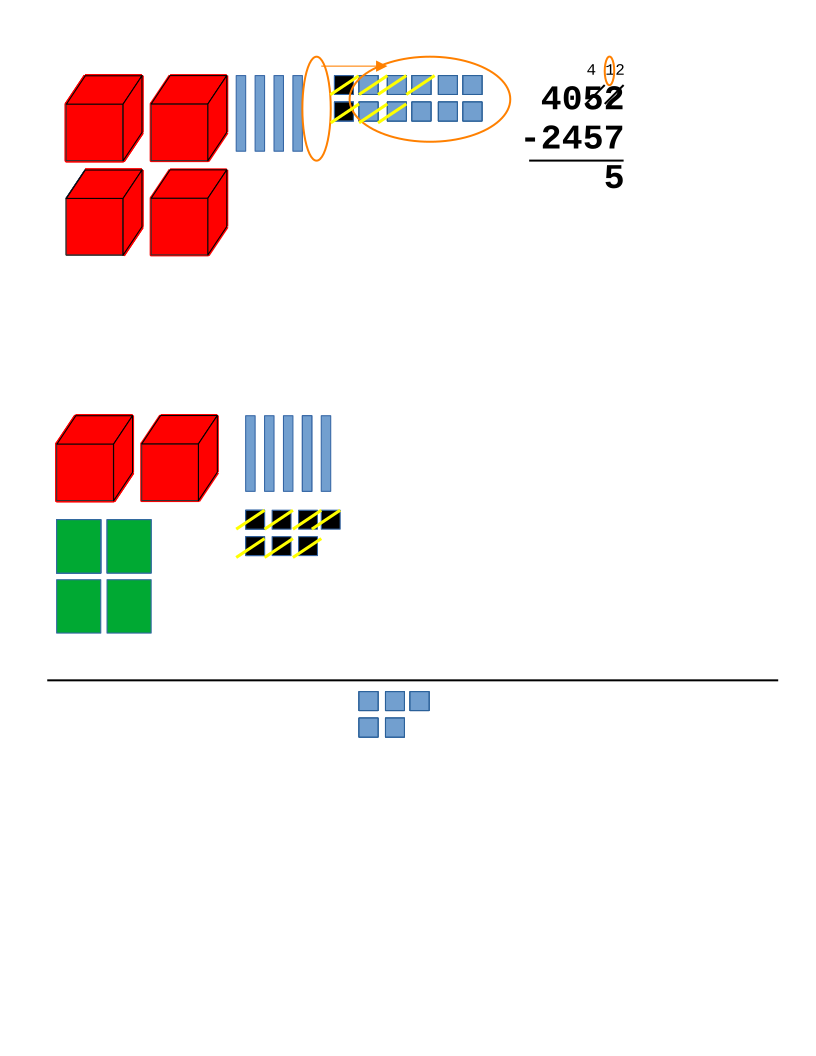
\(7\) in the bottom. So we "borrow" 10 ones, but unlike the standard subtraction algorithm we are "in debt" 1 ten to the bottom number. Thus, we have
\((10+2)-7=12-7=5\) ones in our difference. We mark this, and our additional debt of 1 ten, in our calculation:
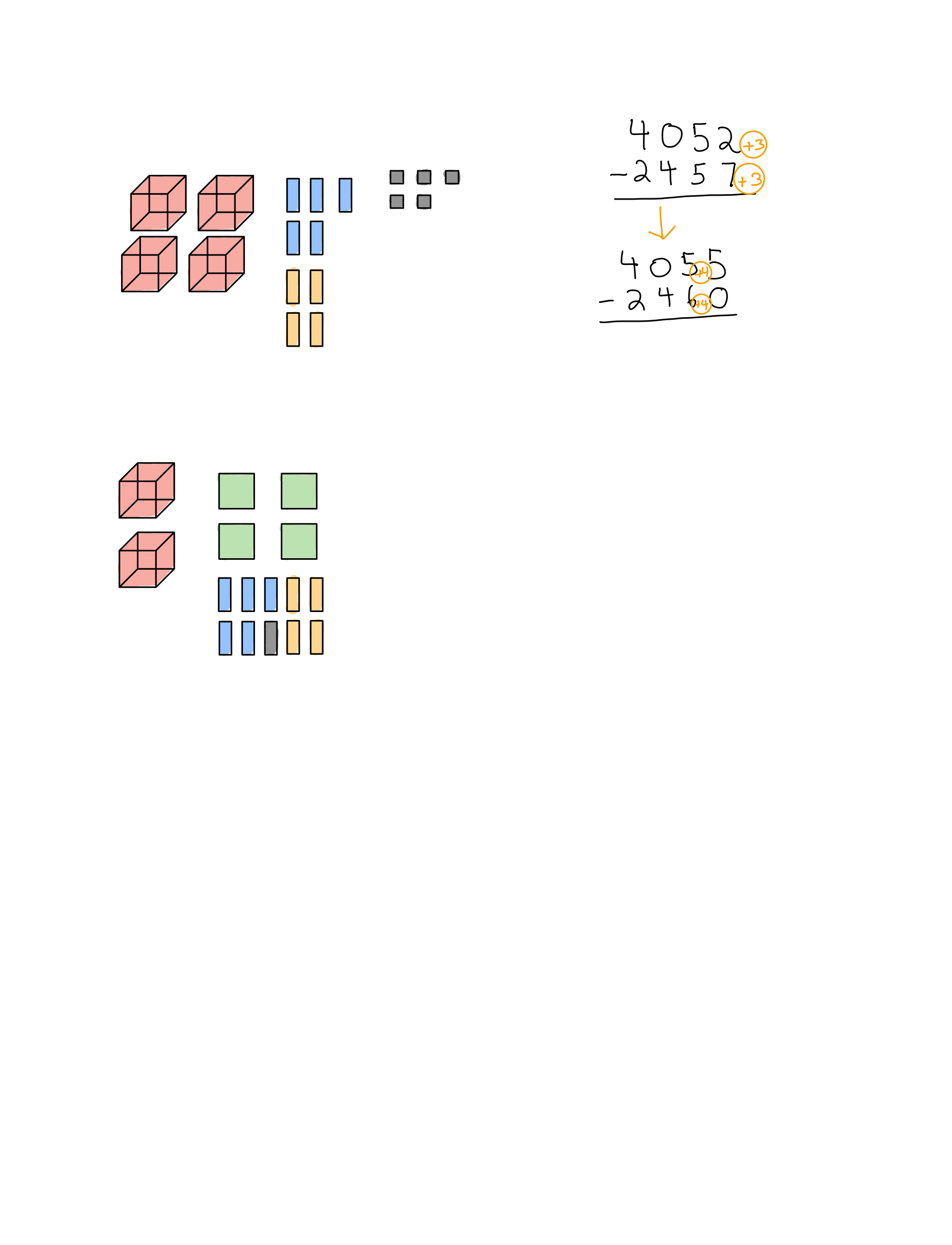
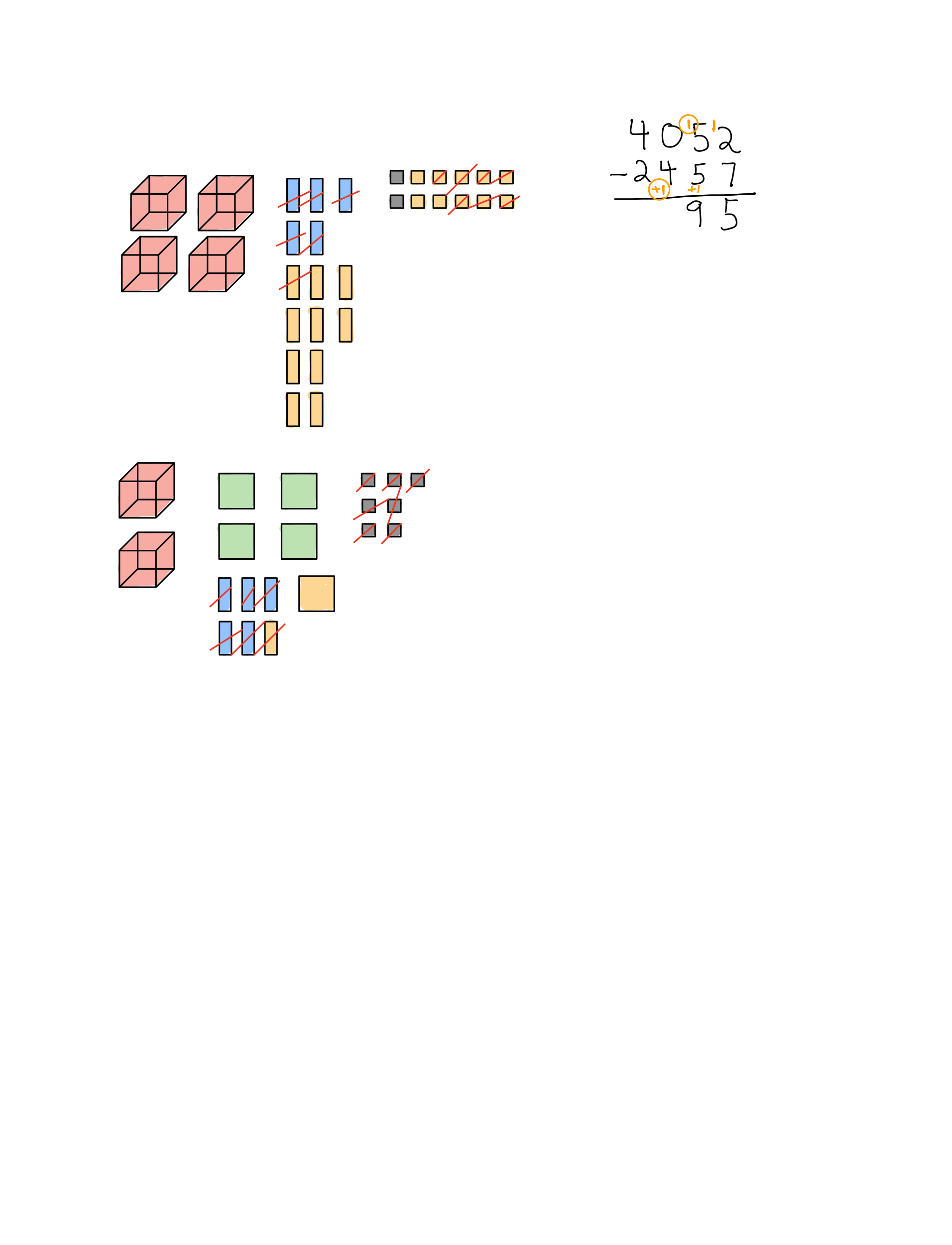
Now we move to the tens place. We see that the
\(5\) in the top number is less than the
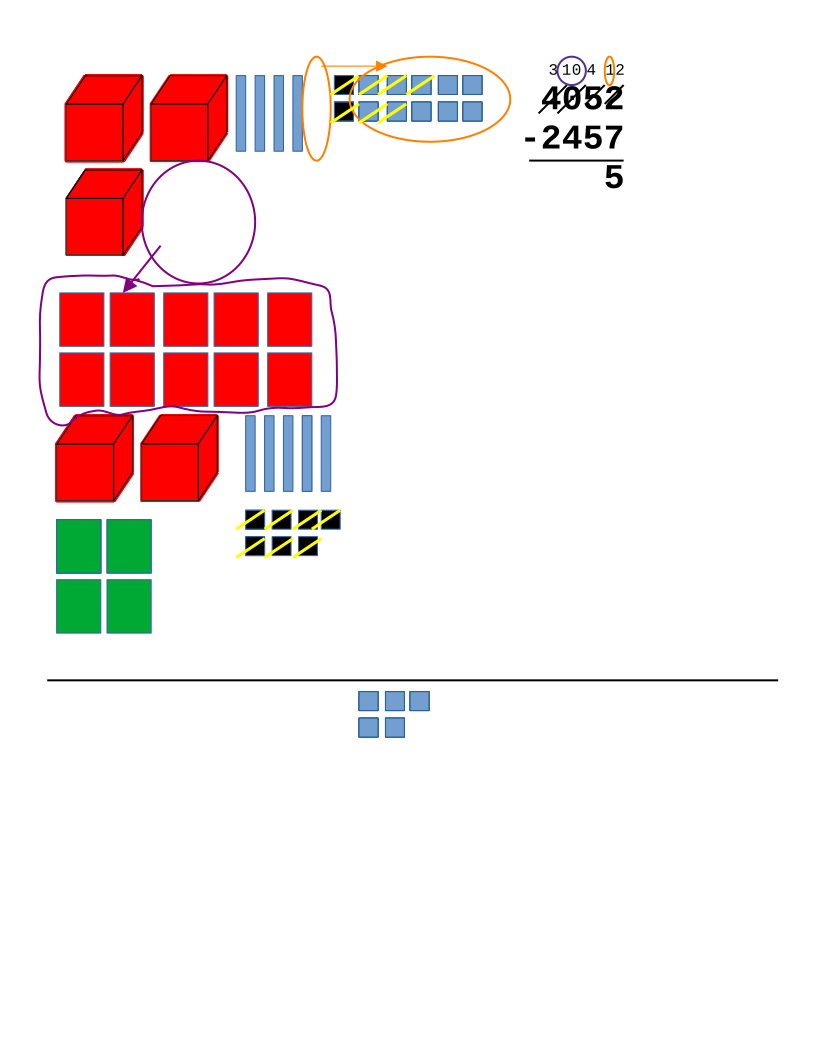
\(5+1\) in the bottom number, so we "borrow" 10 tens from 1 hundred in the same way as the previous step to have
\((10+5)-(5+1)=15-6=9\) tens in our difference. We mark this, and our additional debt of 1 hundred, in our calculation:
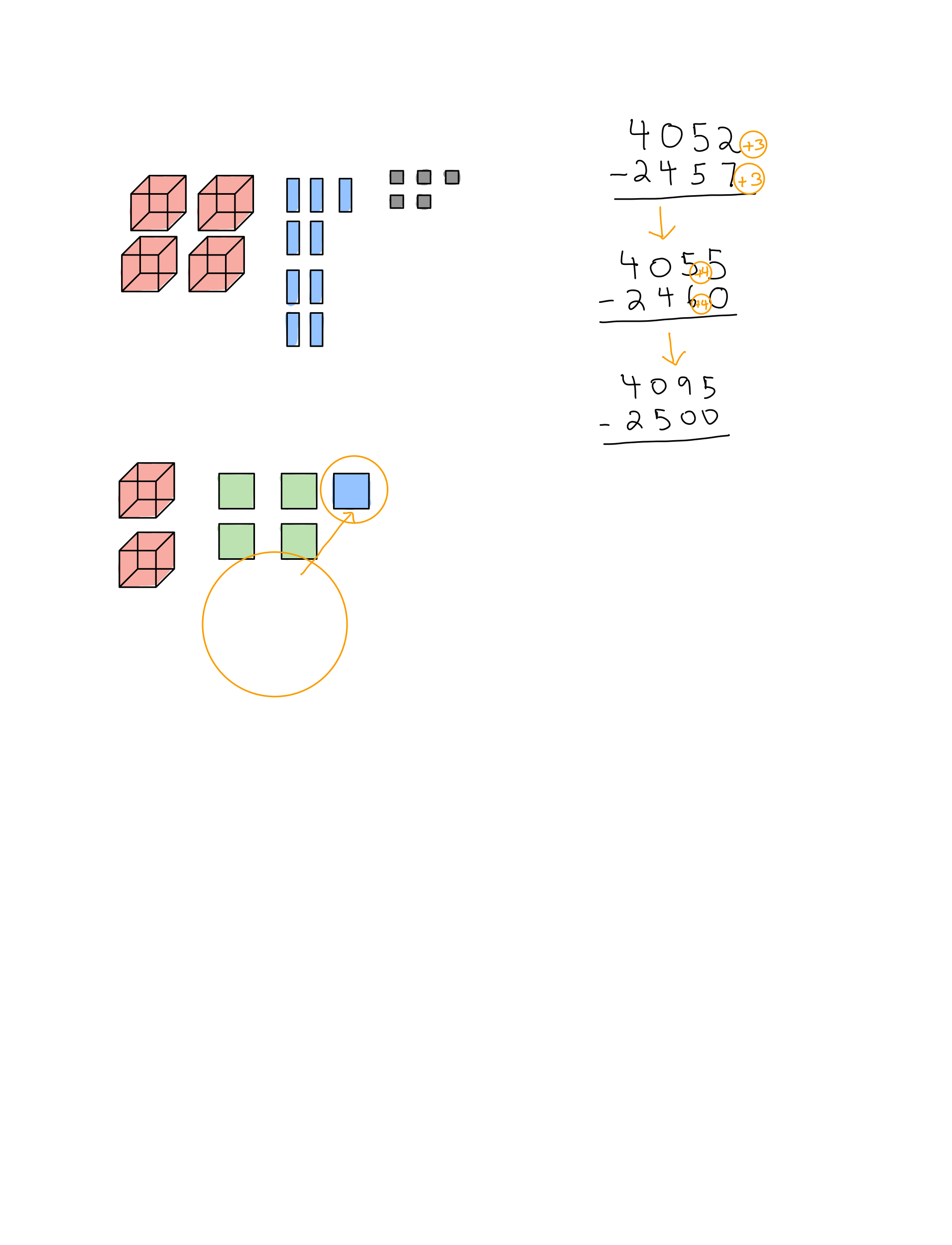
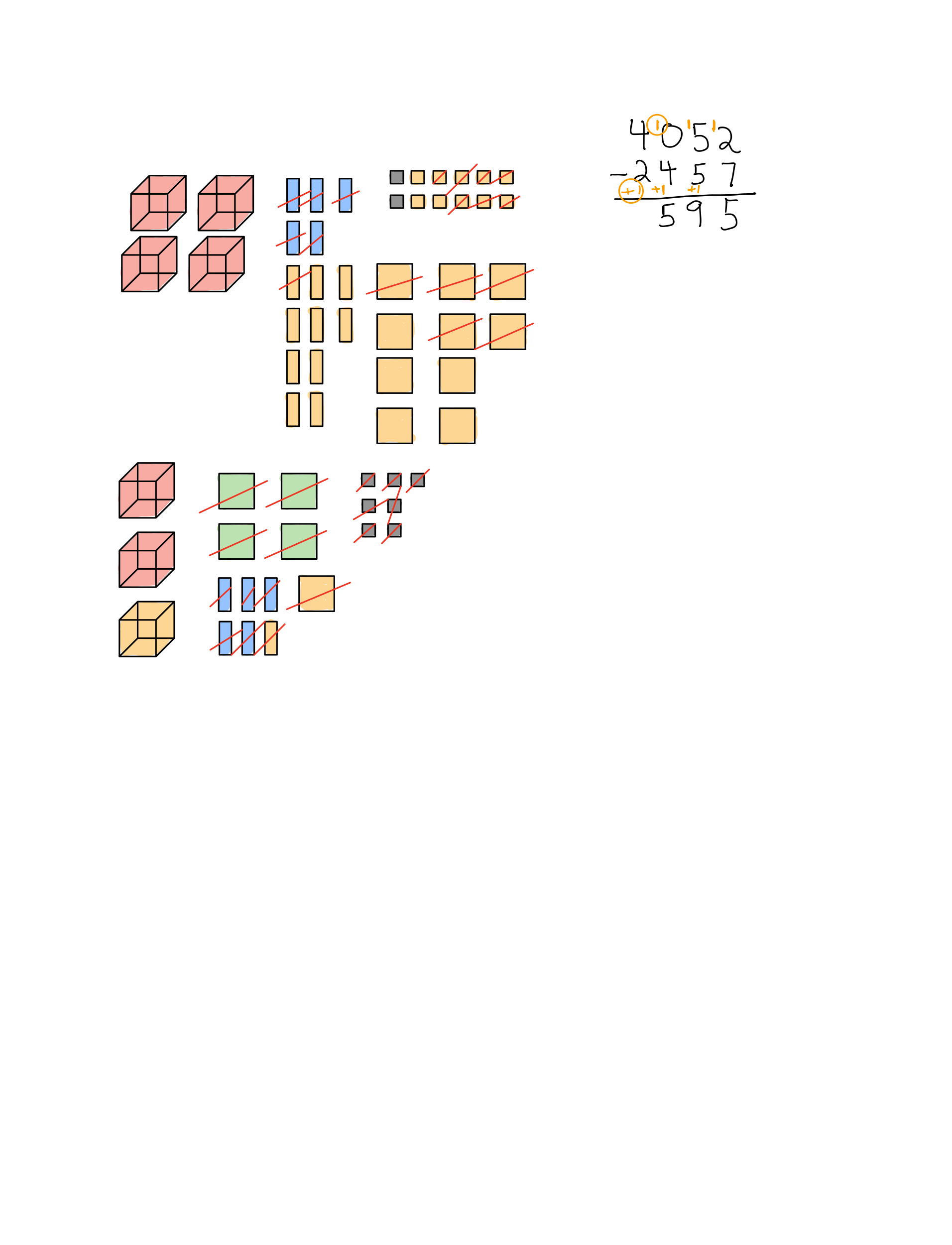
Now we move to the hundreds place. We see that the
\(0\) in the top number is less than the
\(4+1\) in the bottom number, so we "borrow" 10 hundreds from 1 thousand in the same way as our previous two steps to have
\((10+0)-(4+1)=10-5=5\) hundreds in our difference. We mark this, and our additional debt of 1 thousand, in our calculation:
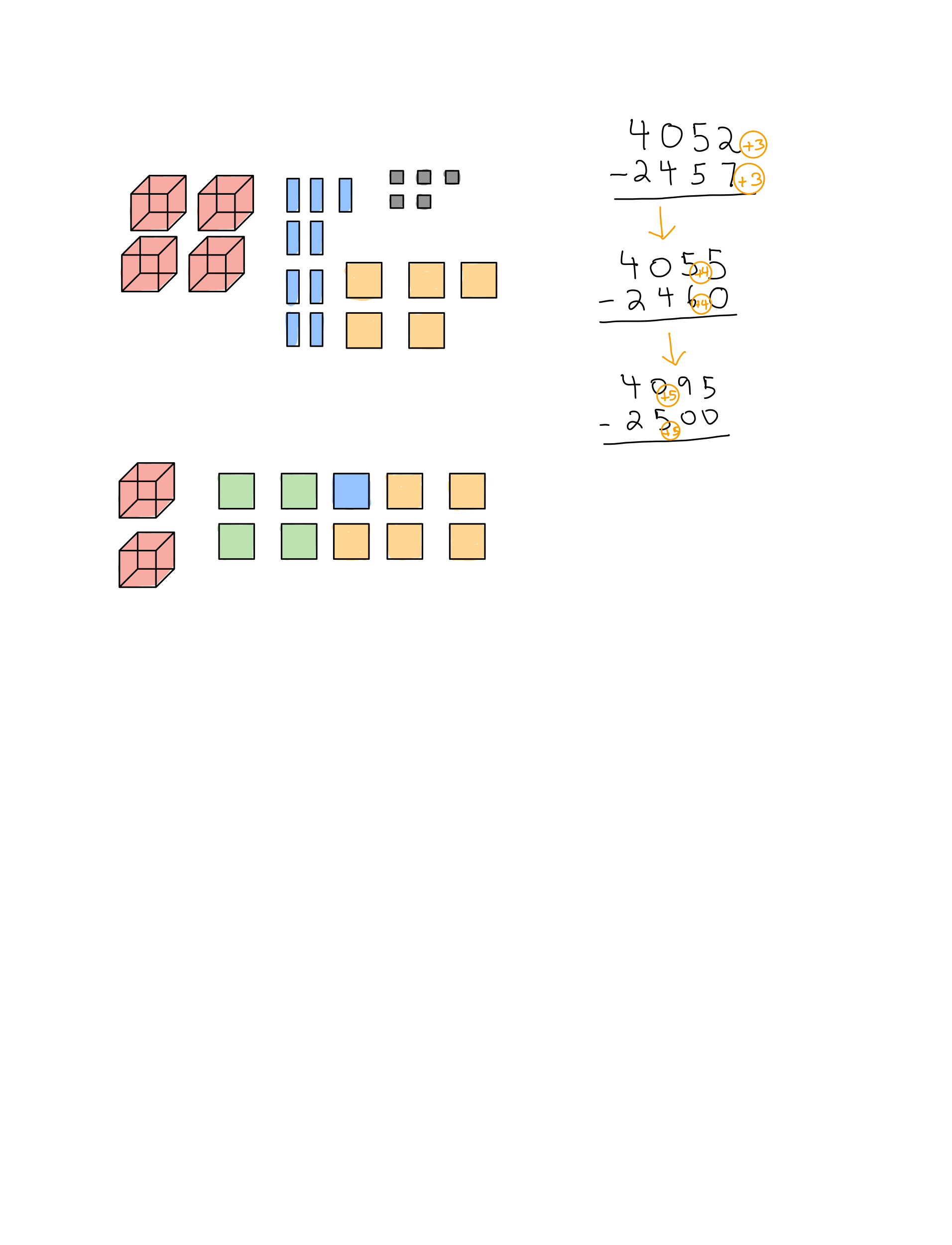
Finally we move to the thousands place. We see that
\(4\) in the top number is greater than the
\(2+1\) in the bottom number, so we subtract without borrowing:
\(4-(2+1)=4-3=1\) and write this in our answer. As there are no more non-zero digits to the left (that is; no larger places than thousands in our numbers,) we are finished, and we have calculated
\(4052-2457=1595.\)