Subsection 3.1.1 Introduction to Number Systems
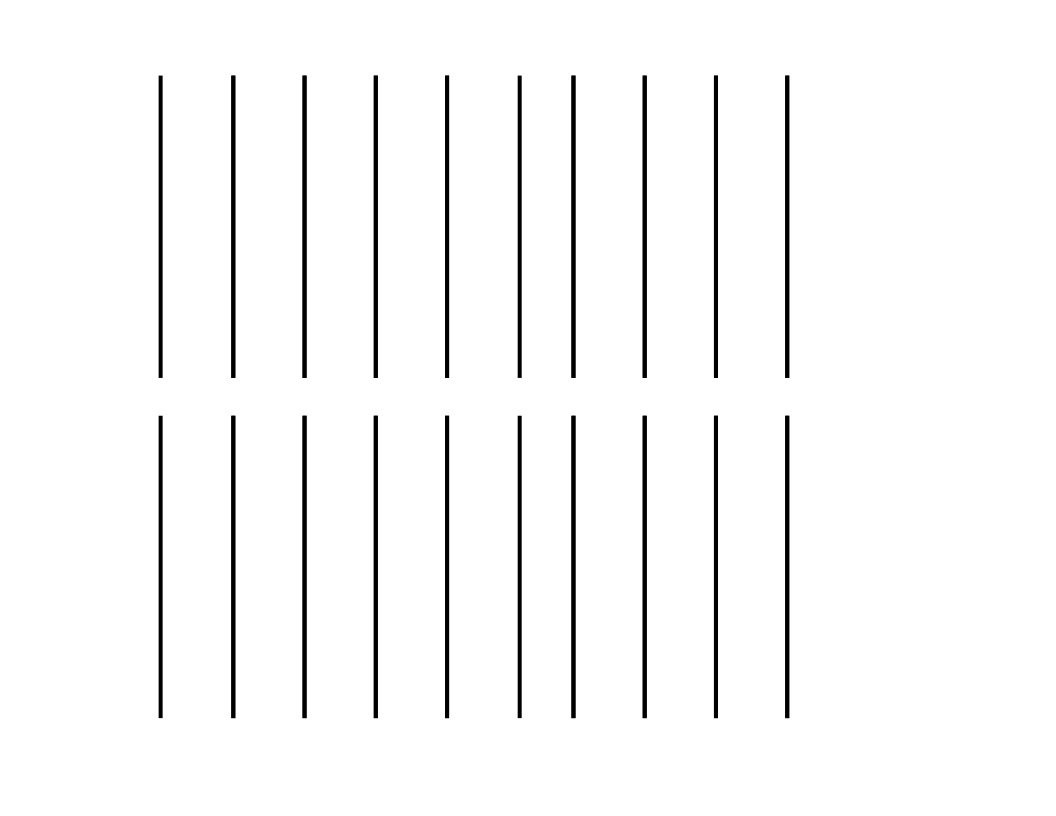
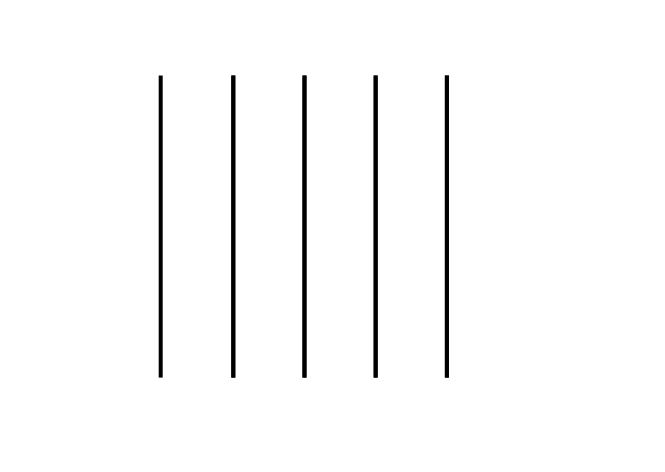
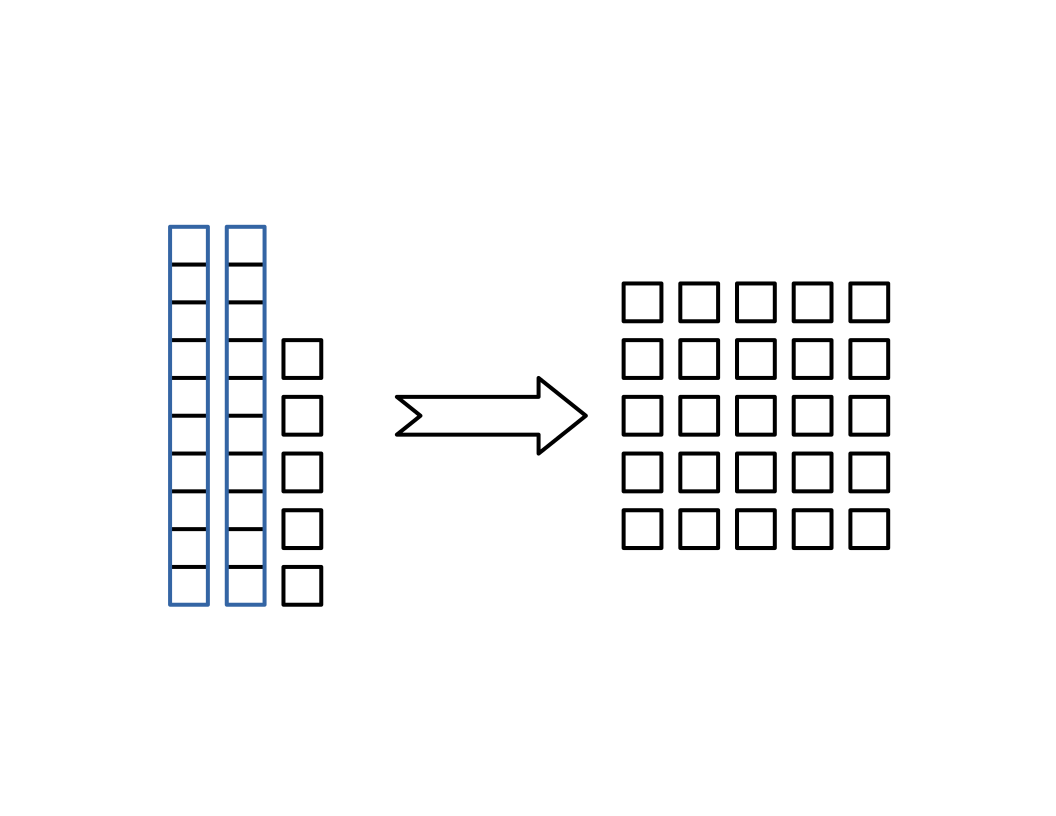
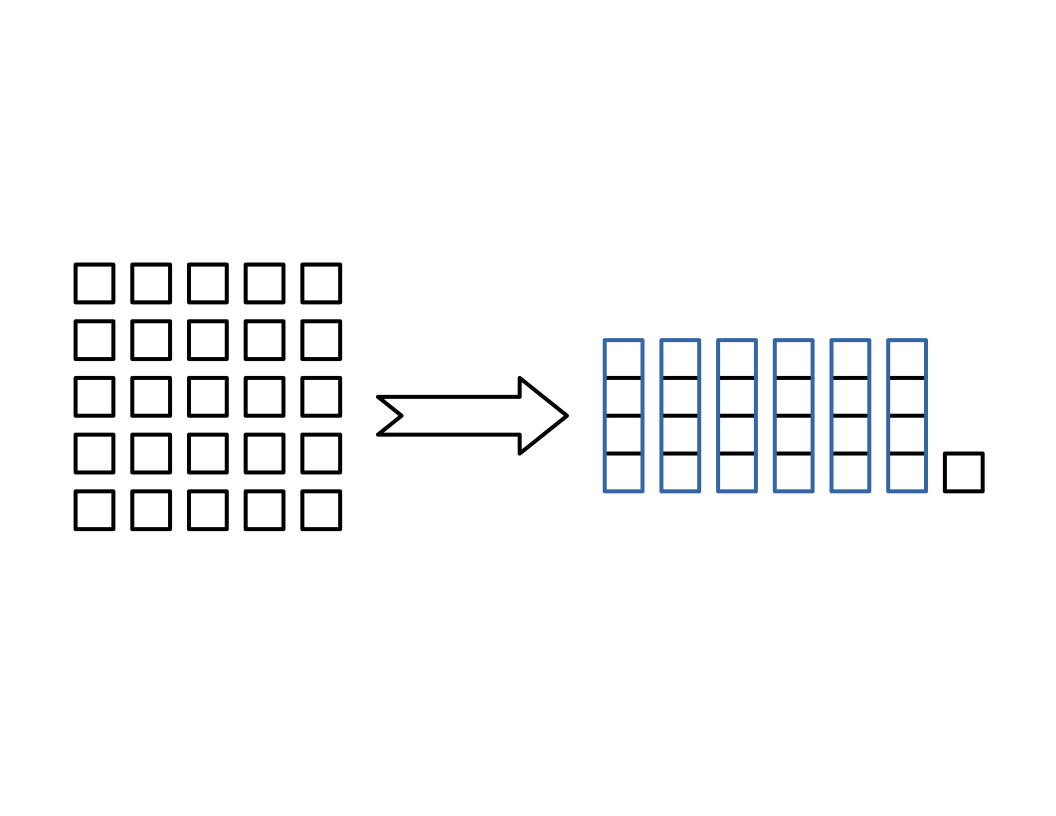
Consider the following objects:
In order to work with the idea of quantities, we want some symbol to represent this number of quantities, and other numbers of quantities too. In the Western world (and much of the rest of the world too) we’ve chosen the symbol "5" to represent these quantities. Note that it doesn’t mean these particular five things, but simply the idea of having that many of anything.
Definition 3.1.1.
A
numeral is a representation of a quantity of some type.
Note the difference between a numeral and a number: a number is the actual amount, whereas a numeral is some symbol that represents this amount.
Numerals, however important as they are to being able to work with and understand quantities, aren’t enough. Just imagine if we had a completely unique symbol for every whole number there is, and there are infinitely many so this is impossible anyway. So, we use the idea of place to represent any number we like using a finite (and usually small) amount of symbols.
Think about why we write the number "eleven" with the numerals 11. What does this actually mean? We have two 1’s, but they’re playing different roles solely due to their location in the numeral. The leftmost 1 means "one ten" and the rightmost 1 means "one one". So, really, we read that number as "one ten and one one," whose number happens to have the name "eleven".
For a number system using place value to indicate a number, we need to have a few necessary things:
-
A symbol for indicating zero and a symbol for indicating one
-
A set
\(D\) of unique numeral symbols,
digits for representing consecutive numbers (beginning with zero and one) without the concept of place value.
Note that
\(|D|\) is called the
base of our number system. For example, our base ten number system has the digits
\(\{0,1,2,3,4,5,6,7,8,9\}\) and any number larger than nine we can represent using the place of digits.
Note that in base
\(b\text{,}\) \(|D| = b\) and
\(D = \{0,1,2, \ldots, b-1\}.\) So, for example, in base
\(7\) the digit set is
\(D=\{0,1,2,3,4,5,6\}\text{.}\) Note that these are all the possible remainders when dividing whole numbers by 7.
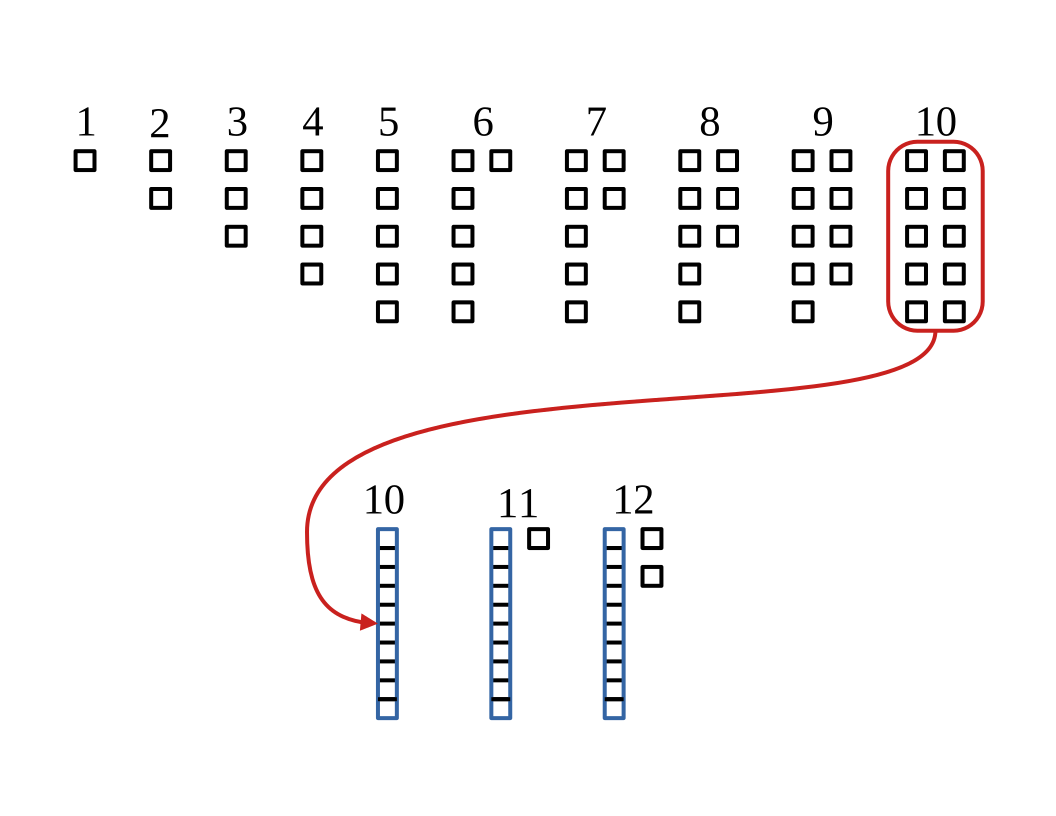
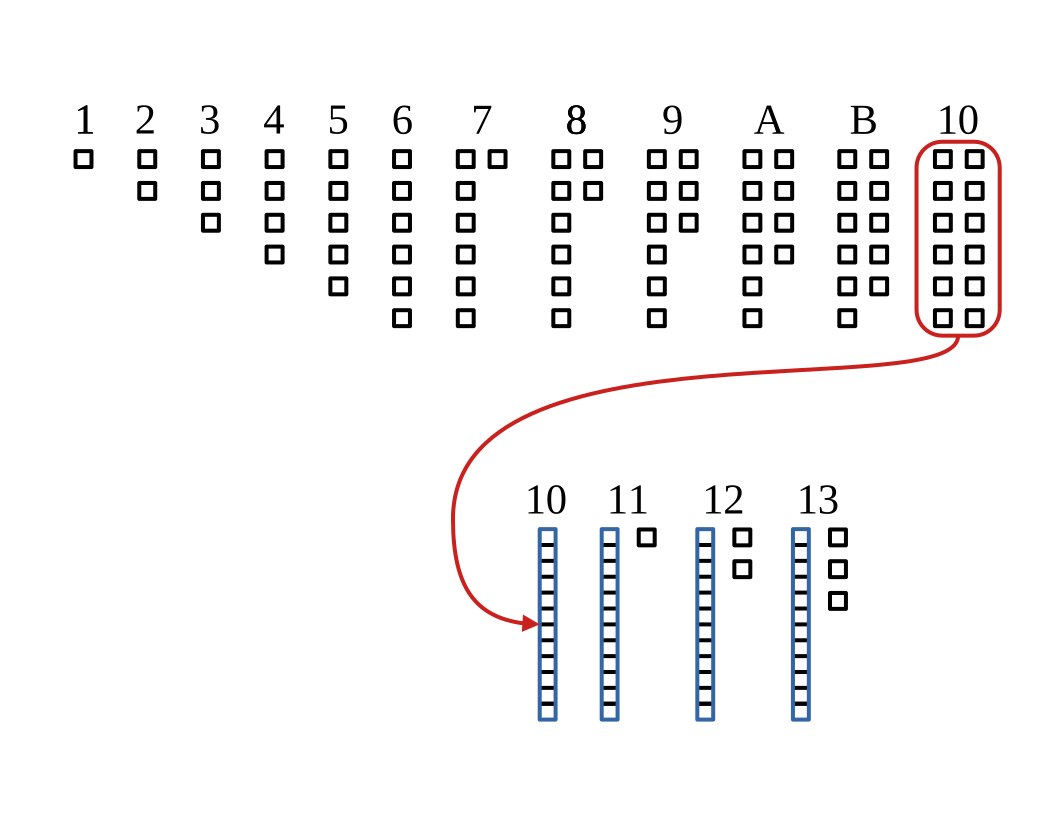
How does place value work? Let’s see what happens as we count up from one to twelve:
The idea is that once we reach nine ticks, we "run out" of digits to express any larger numbers with their own symbol. So, we group ten of these together to make one "ten" and we express this as a digit to the left of the ones place.
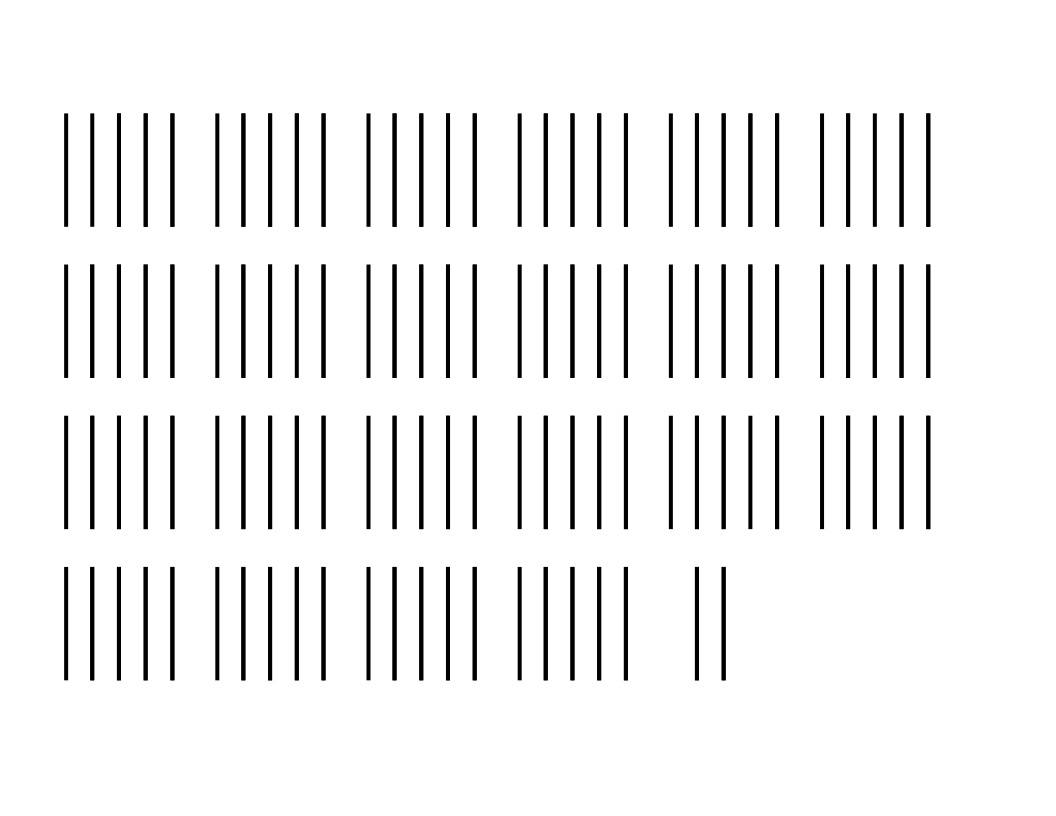
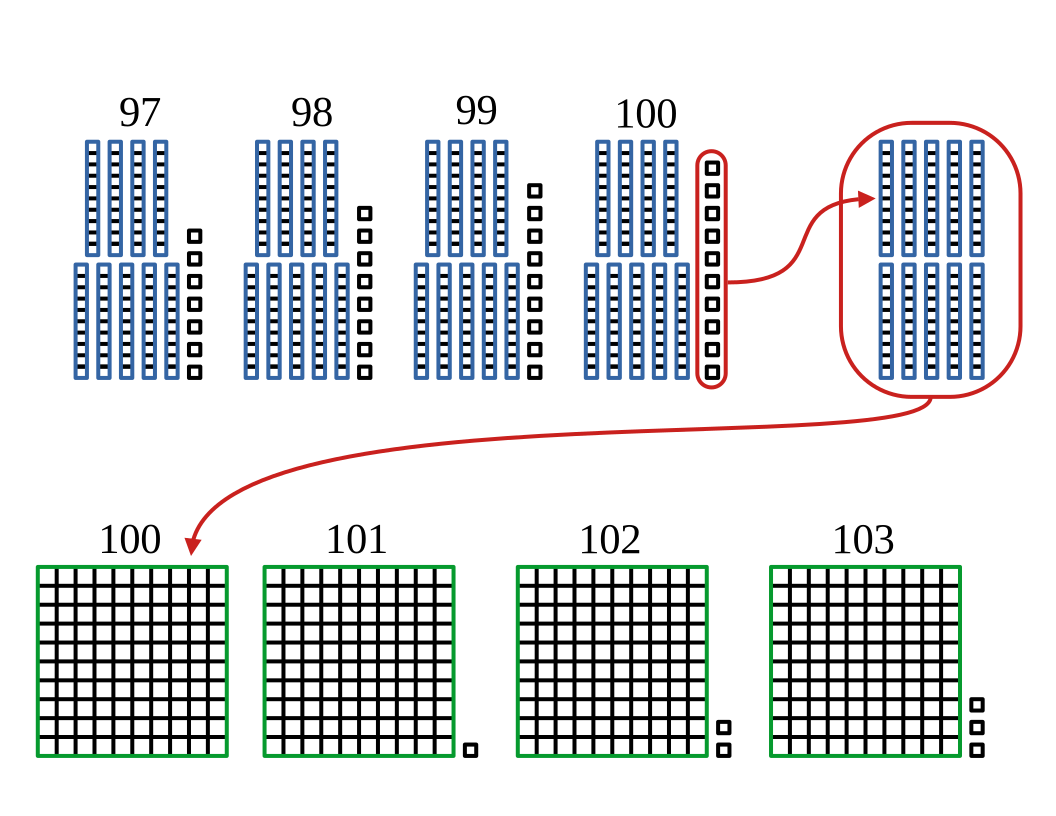
Similarly, let’s count from ninety-seven to one hundred-three:
You can see once we add an additional tick (or one) to ninety-nine, we then have ten ones. So we regroup those ones to one ten. Now this gives us ten tens, and since we have ten of those, we need to regroup them into a new place, called the hundreds place.
We’ll look at models of multiplication and exponents in a later place in the book, but we will rely on our intuition about multiplication and our knowledge of exponents to help us talk about place value. We know that in our base ten number system, we group ten of one place to make one of the next place. We start with the ones place, which we can express as
\(10^0\text{,}\) as any non-zero number to the power of
\(0\) is
\(1\) (we will see why later.) So we know that we can express the tens place as 10 ones
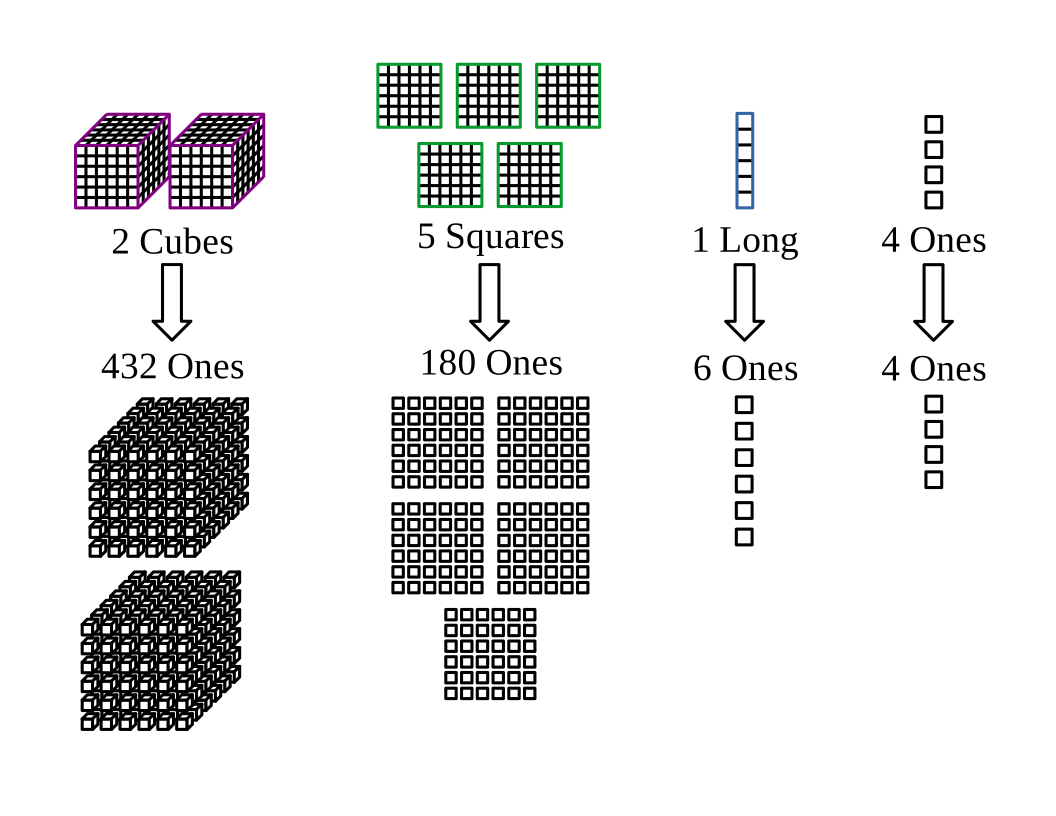
\(=10 \times 1 = 10^1\) (remembering that an exponent of 1 is the same as having no exponent). We can also think of a "long" as being a one-dimensional object; that dimension being length.
Similarly we group 10 tens to make one hundred:
\(10 \times 10=10^2=100\text{.}\) Similarly to a "long" we can view the hundred "square" as a two dimensional object, with length and width. Hopefully you are noticing the relationship to the exponent of the place.
We group 10 hundreds to make one thousand:
\(10 \times 100=10^1 \times 10^2 = 10^{1+2} = 10^3 = 1000\text{.}\) Similarly to a "long" and "square" we can view the thousand "cube" as a three dimensional object, with length, width, and depth.
As we can really only think in three dimensions well (some mathematicians can visualize some higher dimensions, but not too many!), we can’t think of a ten-thousand as a four-dimensional object. However, we can "reunitize" and think of the thousand as a new type of unit. Then, one ten-thousand
\(10 \times 1000=10 \times 10^3 = 10^4\) can be visualized as a "long" made up of ten-thousands, a hundred-thousand
\(10^5\) can be viewed as a square made up of ten ten-thousands. We "reunitize" again when we hit one million, and reunitize after every three places. This may be why we decided to express places in "name", "ten-name", and "hundred-name".
This idea of expressing a number in its places will be very helpful later on. For example we can write
\begin{equation*}
57642 = 5\times 10^4 + 7 \times 10^3 + 6 \times 10^2 + 4 \times 10^1 + 2 \times 10^0.
\end{equation*}
We call this the
expanded place form of a number. Note that we write
\(10\) as
\(10^1\) and
\(1\) as
\(10^0\) to highlight the pattern of decreasing exponents as you move from left to right.
A good question is "is there anything special about regrouping in units of ten ?" or in the language of number systems "why do we use base ten?" The answer to this is no! We can indeed have a base of any counting number we like (say in base
\(b\)) and then regroup once we have
\(b\) of any place.
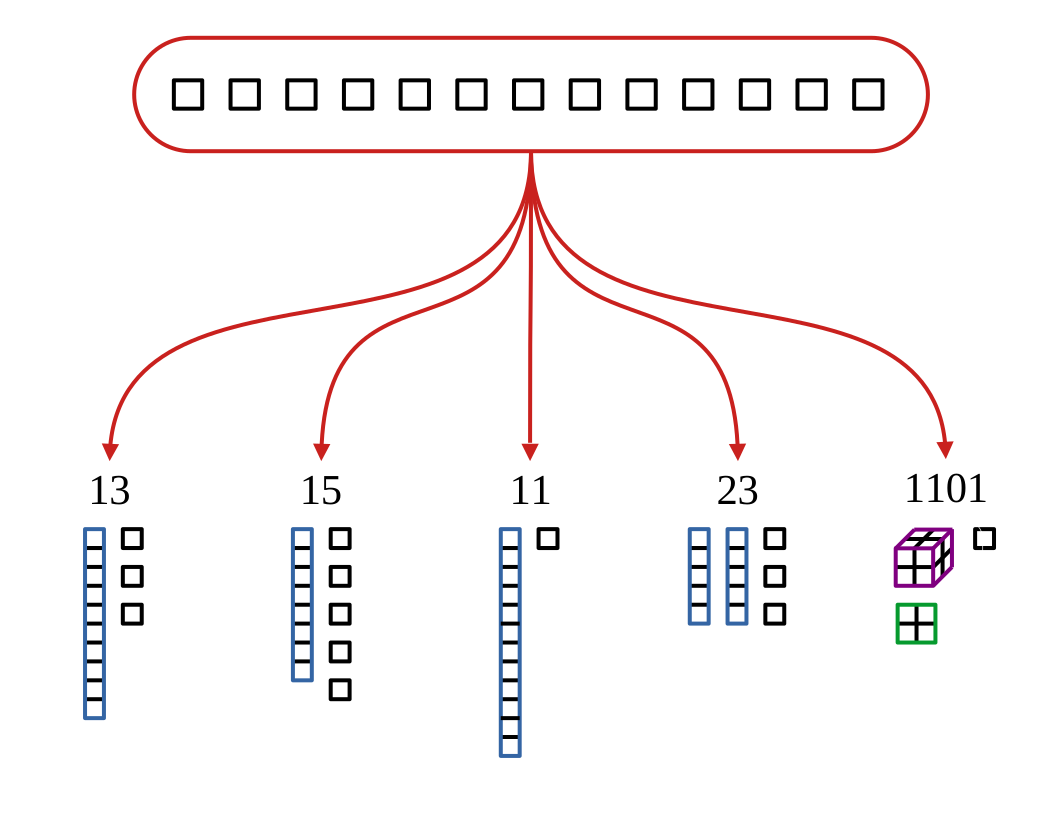
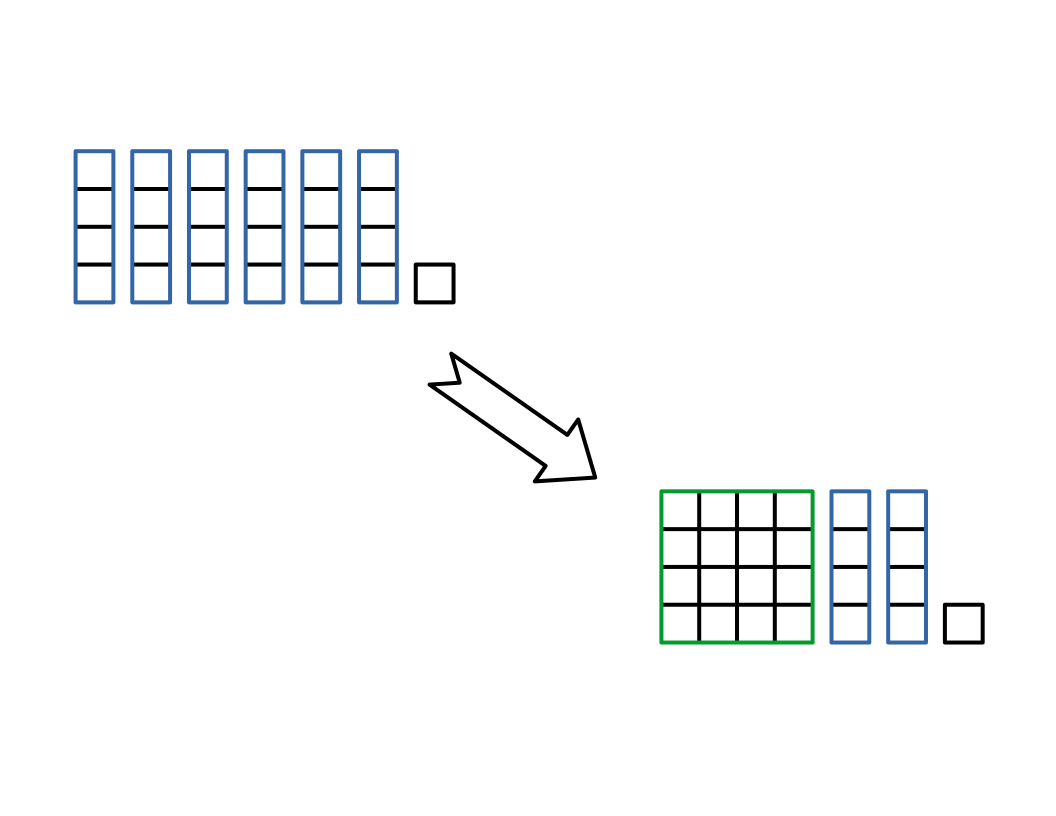
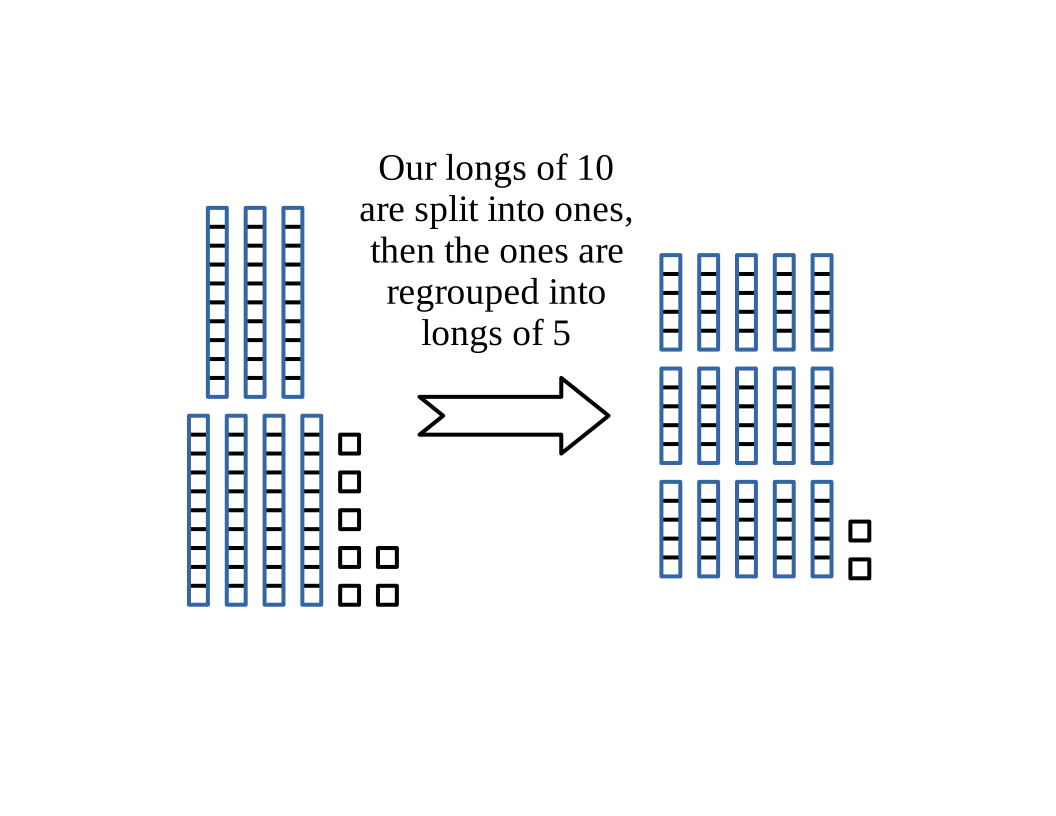
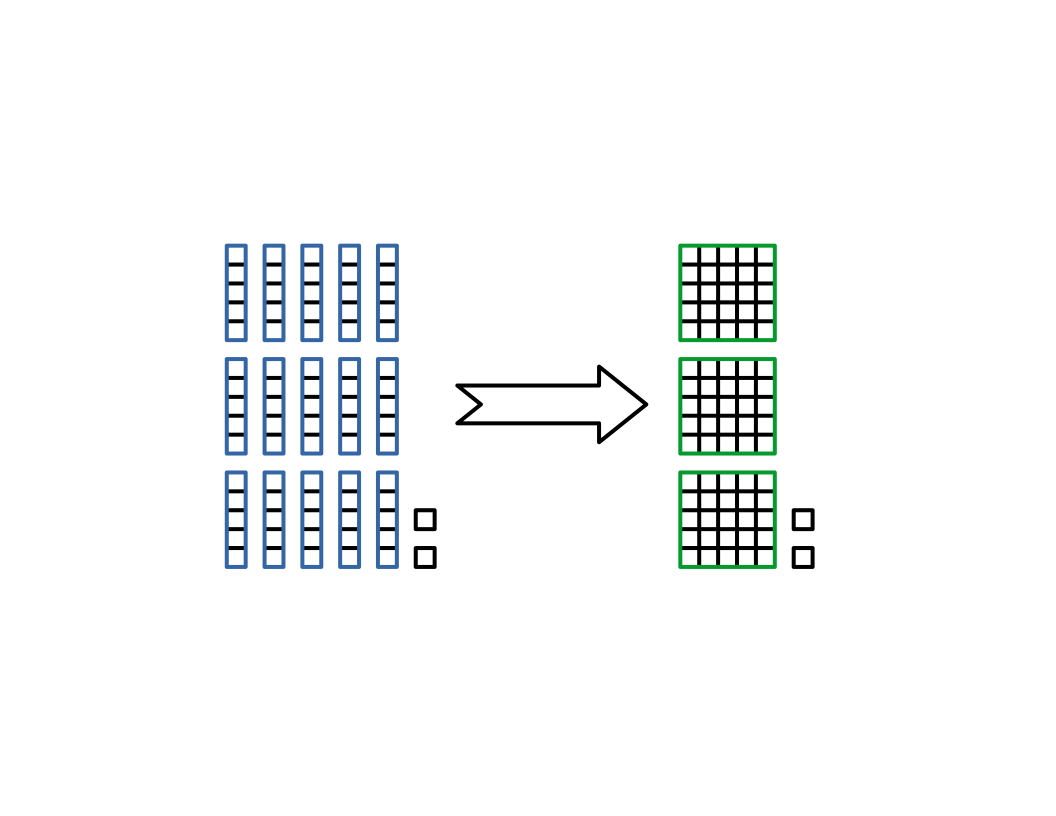
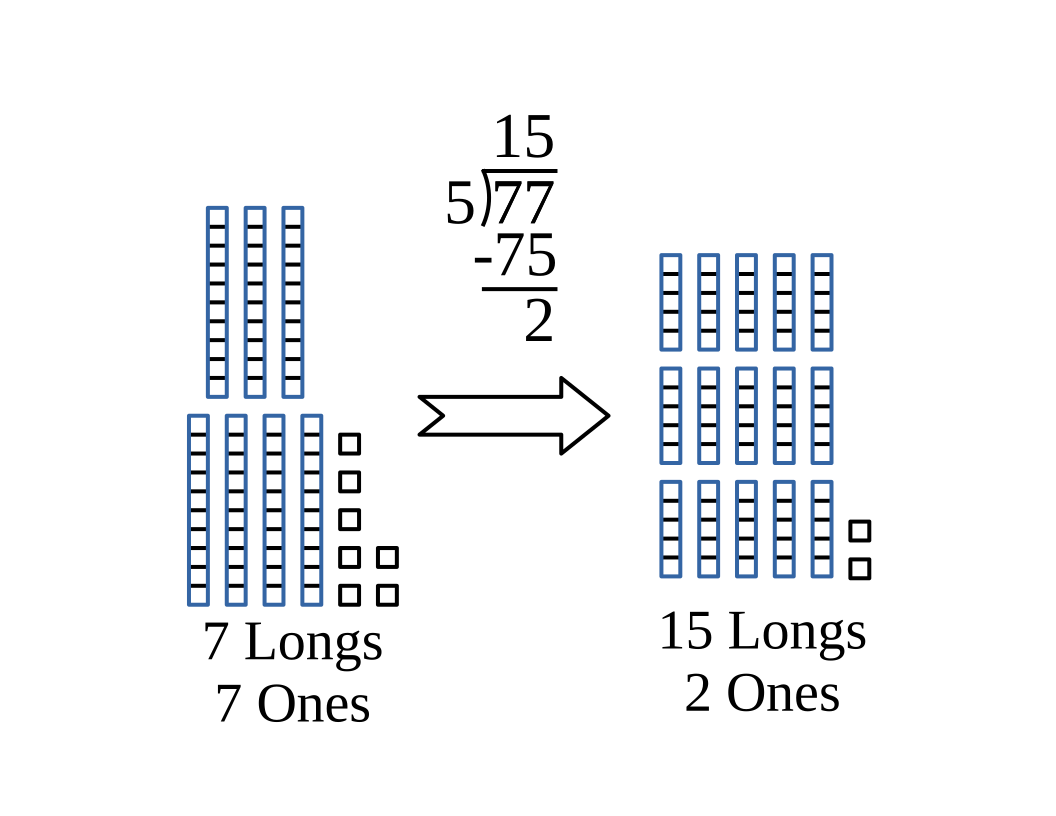
Let’s try writing "thirteen" in a few different bases so that you get a feel for what is happening:
We can write these as the following numerals (note that the base is written as a subscript so that you know what base each number is in. We’ll keep this practice up when needed.)
\begin{equation*}
13_{ten} \ 15_{eight} \ 23_{five} \ 11_{twelve} \ 1101_{two}
\end{equation*}
We’ll explore different bases as this chapter progresses. To have a solid understanding of place value, you should be able to understand numbers written in any base, and be able to work with other bases when doing arithmetic.
Note that in our examples, we group ones into "long" pieces (1-dimensional), then group those longs into squares (2-dimensional), and then group squares into cubes (3-dimensional). In base ten the longs are tens, the squares are hundreds, and the cubes are thousands. A thousand can be thought of as a new kind of "one" in three dimensions—one cube of size ten. This helps explain why our place-value language repeats terms like ten, hundred, and thousand as we move up: ten thousand (a line of thousands), hundred thousand (a square of thousands), and million (a cube of thousands), and so on.
The idea of expanded place form extends to any base too. For example, we can write
\(1537_{eight}\) in its expanded place form:
\(1 \times 10^{3}_{eight}+5 \times 10^2_{eight}+3 \times 10^1_{eight}+ 7 \times 10^0_{eight}\text{.}\) Remember we are thinking in base eight, so
\(10^{3}_{eight}\) is the number
\(8 \times 8 \times 8 = 512\) in base ten,
\(10^2_{eight}\) is the number
\(64\) in base ten, and so on. To avoid any confusion, we’ll only use the words "tens", "hundreds", etc to refer to base ten, and block names like "longs", "squares", etc to refer to places in any base.
As our number system is base ten, we almost have too much "muscle memory" to be able to think about how place value works, and how our algorithms for doing arithmetic work. So we’ll frequently change to other bases for this chapter.